Fire Pit vs. Outdoor Fireplace: Which One Is Right for Your Yard and How to Design Around It
Fire pit or outdoor fireplace? Learn how yard size, gas lines, and seating layout determine which fire feature actually gets used in your space.

Many homeowners choose a fire feature based on what they have seen elsewhere. A friend has a fire pit that looks great. A hotel lobby has an outdoor fireplace that feels sophisticated. However, these observations don’t help you decide which feature belongs in your yard, where it should face, how far it should be from the seating area, or how it should connect to existing utilities. Selecting between a fire pit and an outdoor fireplace just for looks often leads to a feature that goes unused or costs much more to install than necessary.
The Social Difference Between a Fire Pit and an Outdoor Fireplace

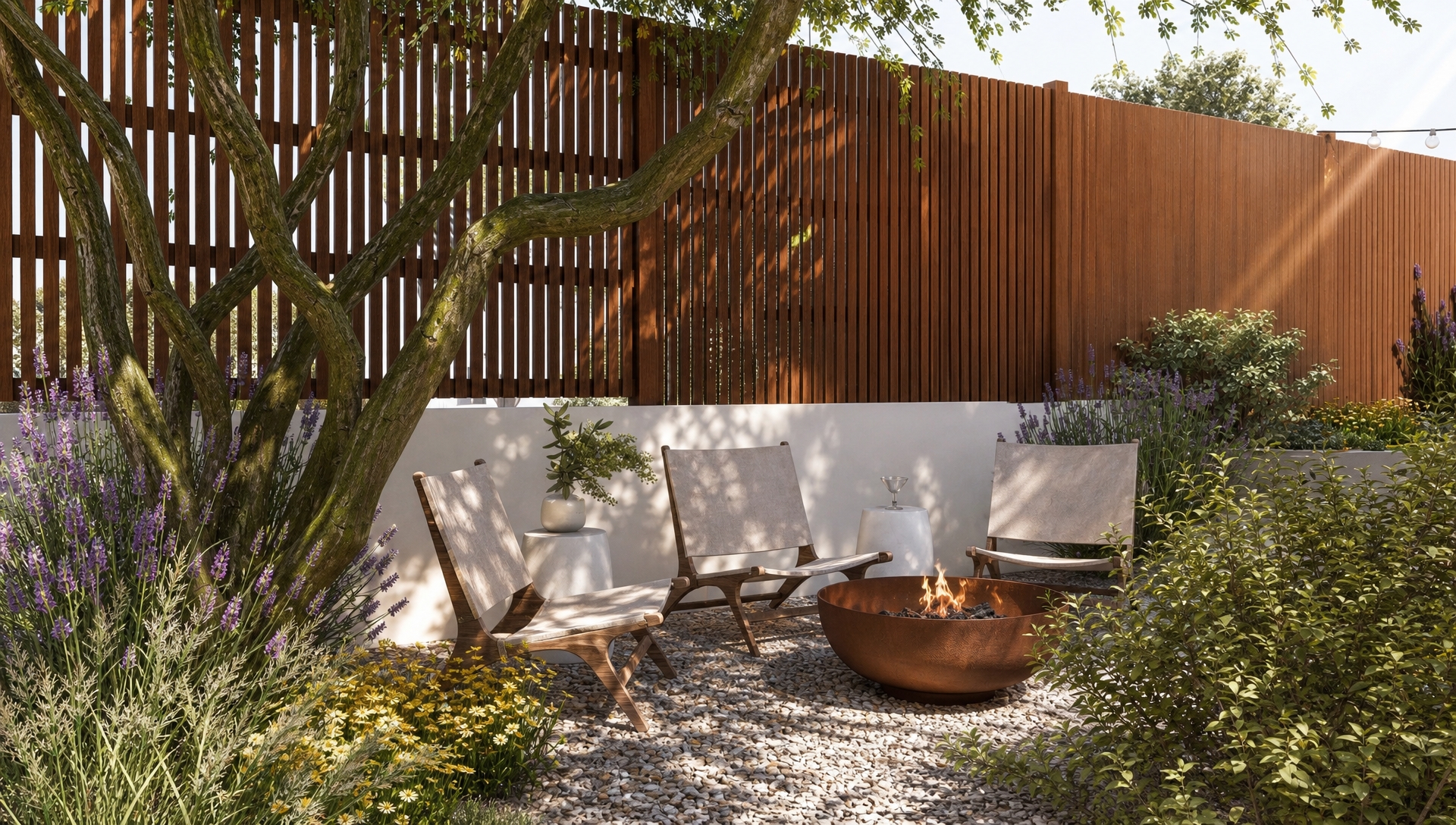
A fire pit brings people together from every side. It sits in the center of a circle, allowing everyone to face each other. Whether it’s just two people or a group of twelve, a fire pit feels natural and welcoming. It works for calm evenings or big parties, adjusting to the size of your group.
An outdoor fireplace is different because it has a front and a back. People gather in front of it, not around it. It works best as the main feature in a seating area, similar to a living room fireplace. While it adds style and a strong visual focus, it can separate your group into those sitting in front and those who aren’t.
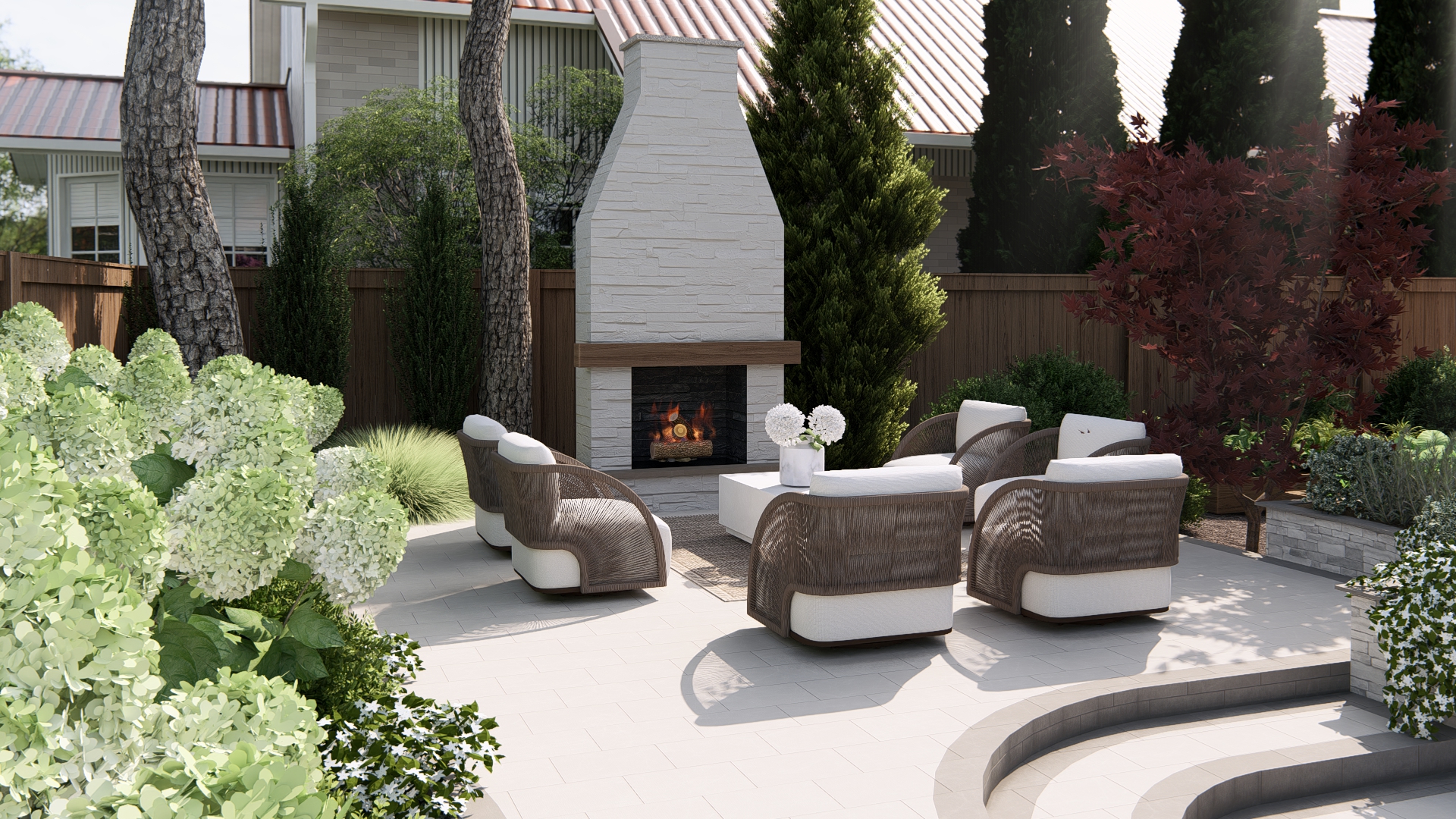
We worked with a homeowner in Austin who enjoyed hosting groups of eight to twelve people, but the outdoor space wasn’t functioning well. Their old fireplace was against the back fence. It looked nice but split guests into three groups: some sat in front of the fireplace, others moved to the far side of the patio, and a few stayed near the kitchen. Instead of bringing people together, the fireplace kept them apart. We suggested replacing it with a fire pit in the center of the patio, with seats all around. This change created one circle, allowing all twelve guests to enjoy the same conversation and finally fitting their needs.
Yard Size and Layout Determine Which Feature Fits
Placement Relative
An outdoor fireplace takes up a specific amount of space and requires room in front of it. It’s best placed against a wall, fence, or building, with the opening facing where people will sit. In a small yard, it can feel too large. A fire pit is more adaptable. You can place it in the middle of a seating circle, build it into a low wall, or tuck it into a corner. A gas fire table needs even less space and can serve as the main feature in a dining or lounge area. For more details, check the guidelines on fire pit types, clearances, and placement for each option.
Gas vs. Wood Changes the Design More Than the Feature Type Does
Choosing between gas and wood affects where you can place your fire feature, how you plan utilities, and how you’ll use it daily. Wood-burning features don’t require utility hookups, but you’ll need space for wood, enough clearance above for safety, and to consider where the smoke will go. Some neighborhoods also require HOA approval for wood fires. Gas features need a gas line installed before you pour the patio. Many homeowners don’t realize this until it’s too late. If you add a gas fire pit or fireplace after the patio is complete, you’ll have to dig up the area to run the gas line, which costs far more than doing it from the start.
Placement Relative to the Entertainment Layout Determines Whether the Feature Gets Used

Your fire feature should be easy to see from the main seating area and the outdoor kitchen, if you have one. If you place a fire pit in a corner where only a few people can see it, it becomes a side spot instead of a gathering place. The same rules for placing kitchens or lounge areas apply to fire features. The best spot is usually in the center of the main gathering area, where everyone can see it from both the kitchen and the lounge. This way, people can move around without losing sight of the fire.
A homeowner in Dallas placed their gas fire pit in the far corner of the yard, near the back fence. During parties, guests had to leave the covered patio and walk 30 feet just to use it. The fire pit ended up as a spot people visited briefly, not the main area for the group. When we moved the fire pit to the center of the patio, under the cover, it became visible from both the kitchen and lounge. This simple change transformed the yard from three separate areas into one big, inviting space.
The Cover Question Changes Depending on Which Feature You Choose
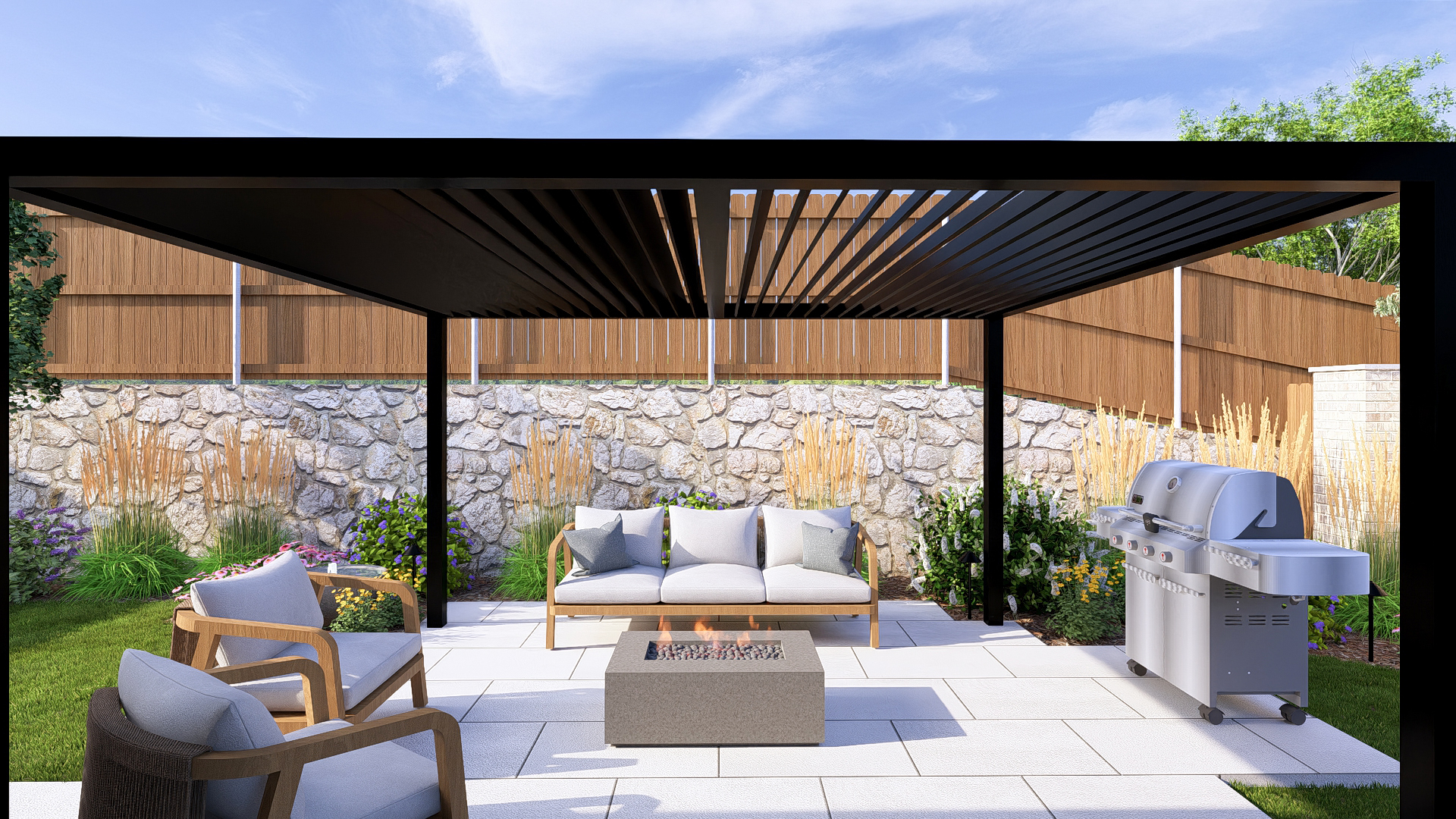
If you want a fire pit under a pergola or patio cover, ensure the cover is rated for open flames. A gas fire pit under a roof needs enough space above it and a vented or open-beam design so heat and gases can escape. Most standard pergolas don’t meet these requirements. Outdoor fireplaces have their own chimney, so they don’t need a pergola cover. But if you plan to cover the fireplace, the chimney must extend above the roof, which complicates the setup.
If you intend to place a fire feature under a pergola, design the pergola for it from the start. You can’t add this later once the pergola is finished.
A fire feature can make your backyard feel warm and inviting. When you choose the right one and place it properly, it brings people together, allows you to use your yard later in the year, and provides a great focal point for your space. Conversely, if you choose the wrong feature or place it poorly, it may look nice but hardly get used. Deciding between a fire pit and an outdoor fireplace isn’t difficult, you just need to make your choice before you pour the concrete.

Set up a consultation with a BACQYARD designer. Tell us how you like to host, what your yard looks like, and if you’re considering a fire pit or a fireplace. We’ll help you determine which option fits your yard best and where it should go, all before you finalize your plans.
Related Articles
.png)




Ready to co-design your outdoor space?
Start now—secure checkout, no hidden fees. Prefer to talk first? We’re happy to meet you.