What Happens If the Plan Needs to Change During Construction? A Straight Answer
Plans change during construction. Here's the difference between a field adjustment and a design change, and how BACQYARD keeps your build moving when it happens.
Introduction
Most landscape design projects change at least once between the initial plan and the finished build, and the bigger and more complex the project, the closer that gets to a certainty. This isn't because the design was flawed. It's because actual construction surfaces conditions that no plan, however thorough, can fully anticipate. You might find a root system exactly where a foundation needs to go. A utility line might appear that satellite imagery never detected. A grade condition might look different once the grass is stripped away.
So the useful question isn't whether something will need adjusting. It's whether you have a clear process for when it does, or whether that moment becomes a contractor making a call on your behalf without you in the room. Mid-build changes are a standard part of construction. The difference between a modification that costs you nothing and one that turns into expensive regret usually comes down to whether you have a designer available when that moment arrives.
The Difference Between a Field Adjustment and a Design Change
A field adjustment is minor and site-driven. Moving a plant two feet because of a root system, adjusting a paver edge to account for a drain, or regrading slightly because the actual ground level differs from the survey by a few inches are all common. These occur on every project and do not require a formal revision. A competent contractor who understands the design intent handles these small matters routinely. Understanding the difference between a field adjustment and a design change starts with knowing how the full handoff is supposed to work.
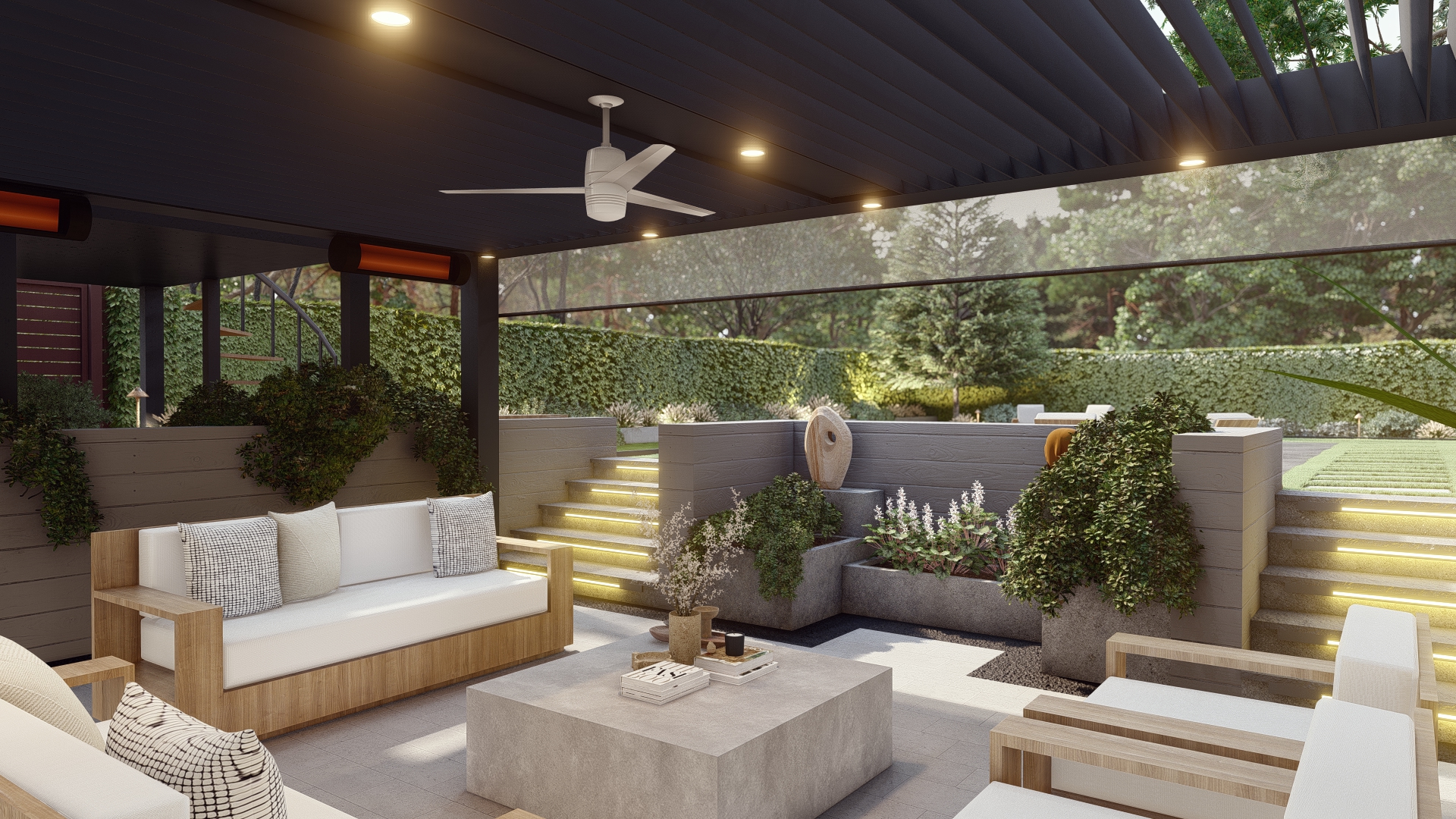
A design change affects the layout, materials, or features in a way the contractor cannot reasonably interpret alone. Relocating a pergola because of an underground utility, substituting a specified material because it is unavailable and the replacement has different dimensions, or moving a patio feature because of a septic easement all qualify. These require the designer to produce a revised plan. The practical rule is simple: if the change would be visible in the 3D rendering, it is a design change. If it does not, it is likely a field adjustment.
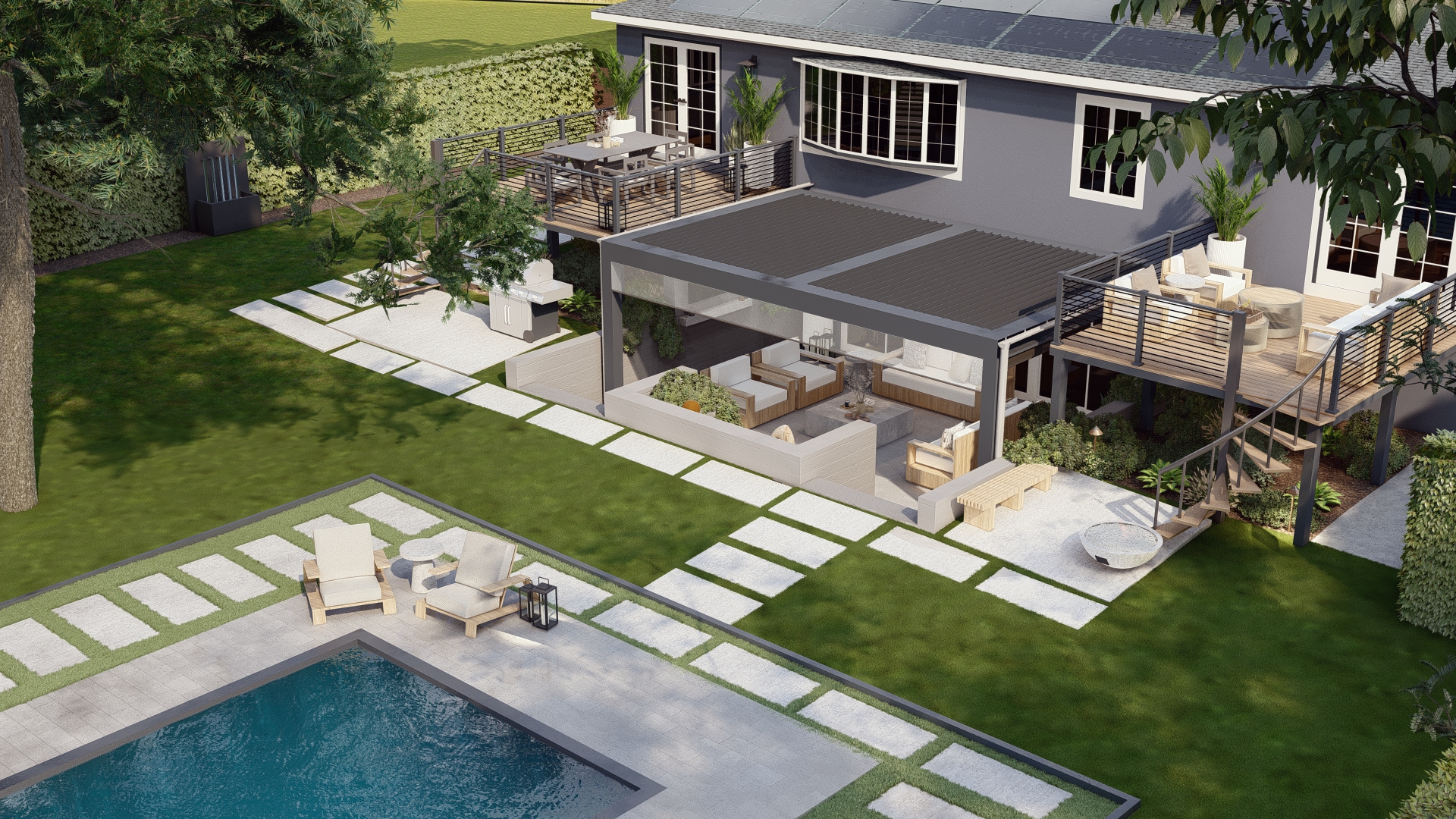
For example, a homeowner in Sacramento, California, was three days into their patio installation when the contractor found the subgrade needed two inches of additional base material. The contractor adjusted and moved on without delay. Two weeks later, the same contractor discovered the planned pergola sat over an irrigation manifold. That was a design change. The homeowner contacted BACQYARD, a revised CAD plan was issued, and the contractor worked from the updated document.
What Free CAD Plan Revisions Mean in Practice
When a site condition requires a layout adjustment during construction, BACQYARD produces a revised CAD plan. The contractor does not have to improvise, and you do not have to choose between letting them make an uninformed call or stopping the project entirely. The revision process works because the contractor already knows how to read and work from a professional plan.
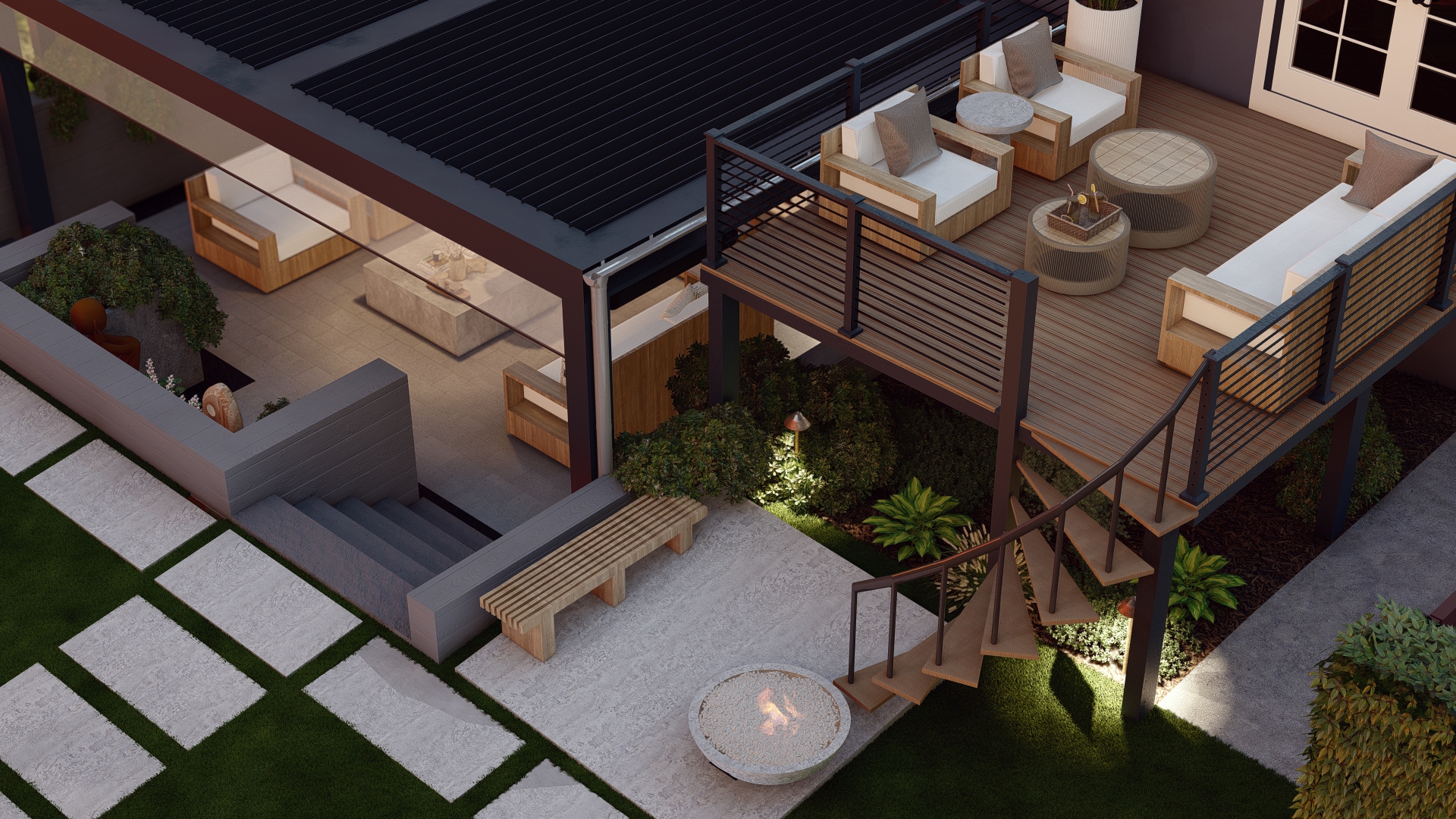
This matters because a contractor improvising a layout change without a revised plan creates downstream effects you cannot fully evaluate in the moment. Does moving the pergola footing affect the drainage pitch? Does relocating a planting bed affect the irrigation zone? A designer issuing the revision has already worked through those technical questions.
For instance, a homeowner in Portland, Oregon, was in week two of a full build when the contractor discovered the planned bench location conflicted with a gas line not visible in the pre-construction survey. BACQYARD issued a revised CAD plan within forty-eight hours, relocating the bench, adjusting the patio dimension to maintain clearance, and flagging the gas line as a no-dig zone. The build continued without stopping. Be clear that this provision covers genuine site conditions rather than unlimited redesigns or late-stage preference changes.
What If You Change Your Mind About Something Mid-Build
Seeing a space under construction is different from seeing it in a rendering. Scale feels different. Proportions become physical. It is normal to look at a patio being poured and want it to be two feet wider. If this happens, flag the idea to the contractor and contact the designer immediately. The designer will assess whether the change is feasible at the current stage and what it affects downstream.
If the change is feasible before significant work is locked in, a revision is issued. If work already completed would need to be undone, the designer explains the implications so you can decide if the modification is worth the cost. The design revision rounds in the design process are the right time to resolve preferences before construction makes changes more expensive. Homeowner-initiated changes mid-build may involve additional fees depending on the scope, as the free revision policy applies to unexpected site conditions.

One Thing That Makes Every Mid-Build Change Go Smoothly
Every change goes better when the designer knows about it before the contractor acts. The designer has context that the contractor Flacks, such as why a feature is positioned where it is and what spatial relationships it maintains. Give your contractor one instruction at the start of the build: any change beyond a minor field adjustment gets flagged to you before it is made, so you can loop in the designer. That is it. One sentence. It costs nothing and prevents the most common source of mid-build regret.
Construction is where your landscape design meets reality, and reality occasionally has other ideas. What protects you is not a plan that anticipated everything, but a designer who is still reachable, a process for issuing revised documentation, and a contractor who knows to ask before they act.
Book a free 1:1 consultation with a BACQYARD designer. Ask about the full design package, what happens if site conditions require adjustments during the build, and how the revision process works from first draft through final installation.
Related Articles





Ready to co-design your outdoor space?
Start now—secure checkout, no hidden fees. Prefer to talk first? We’re happy to meet you.