How to Design Outdoor Lighting That Works
Layered lighting design fixes the flat, dim backyard problem after dark. Learn how ambient, task, and accent lighting work together for real results.

Creating a backyard heaven does not only include attractive landscaping, but it's about shaping a space that is enjoyable all day long and even at night. Most of the backyards look absolutely stunning in the daytime but become a dark flat surface at night. The patio that photographs beautifully at golden hour turns into a flat, underlit surface once the sun goes down. The pergola loses its structure. The fire pit, if there is one, becomes the only light source in the yard, and everyone crowds around it not because of the fire but because there is nowhere else to see.
Layered lighting is one of the most popular design approaches for addressing this issue and enhancing your lawn’s ambiance and functionality. It's basically about combining task, ambient, and accent lighting in layers to design your yard and keep it visually appealing even after 8 pm.
Why Most Backyard Lighting Falls Flat

One of the main reasons your outdoor lighting falls flat is not the fixture problem but a layering issue. Many homeowners install one type of light, like string lights or typical path lights, which makes the yard look dimmer in the dark because they only serve a single purpose and cannot handle all the needs of the yard. For a balanced outdoor layout, introduce a three-layer lighting framework. It includes strategically installing ambient light, task light, and accent light. Ambient light illuminates the whole space, task light focuses on specific functional zones like stairways or an outdoor kitchen, and accent light adds visual interest by highlighting architectural features and other design elements.
ICP data shows that more than 54.3% of buyers request the lighting feature. Also, it's one of the most afterthought features in designing the yard. It shows how important landscape lighting is, because if not done right, it kills the vibe of your space. For more details, visit our guide on How to Design Landscape Lighting for better planning for backyard lighting
One of the homeowners in Nashville installed string lights across the pergola and six path lights along the walkway. The lawn looked fine in photos but felt underlit during evening gatherings. Their outdoor kitchen area and back fence just blend in the dark. They also have ambient lights from the strings and task lights from the path markers, but nothing that creates visual depth or defines the individual zones after dark. It shows that not just adding the lights but layering them in a strategic manner fixes the issue.
Ambient Light

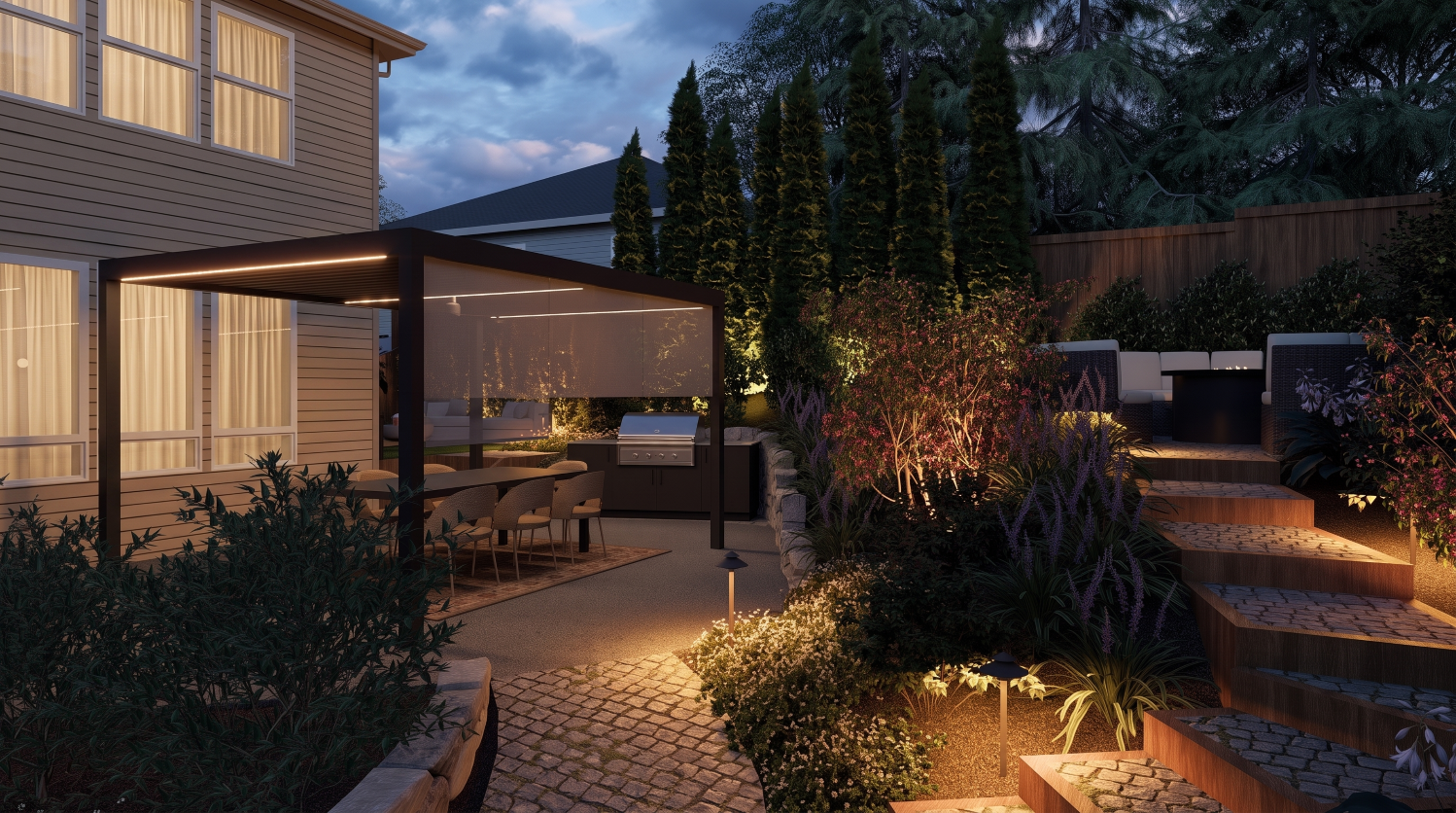
Ambient light is the foundation layer while planning the lighting strategy in your yard. It provides an overall soft glow to the whole area and makes it feel welcoming from the inside looking out. It creates a comfortable level of brightness so that you can walk through your outdoor space safely after dark. Without these lights, your yard looks dim and unattractive, even if specific zones in it are lit.
The most common sources of ambient lights include overhead string lights mounted to a pergola, LED strip lights under the patio cover, or wall-mounted sconces on the exterior of the house. Each of these lights has its own specifications and functionality.
At BACQYARD, string lights are the most requested ones. These lights are mounted to pergola beams without any extra support or structure, resulting in an enclosed and covered outdoor space. Also, the mounting points for string lights are part of the pergola design. You can explore the Ultimate Guide to Pergolas to see how pergola framework connects with lighting planning.
Task Light
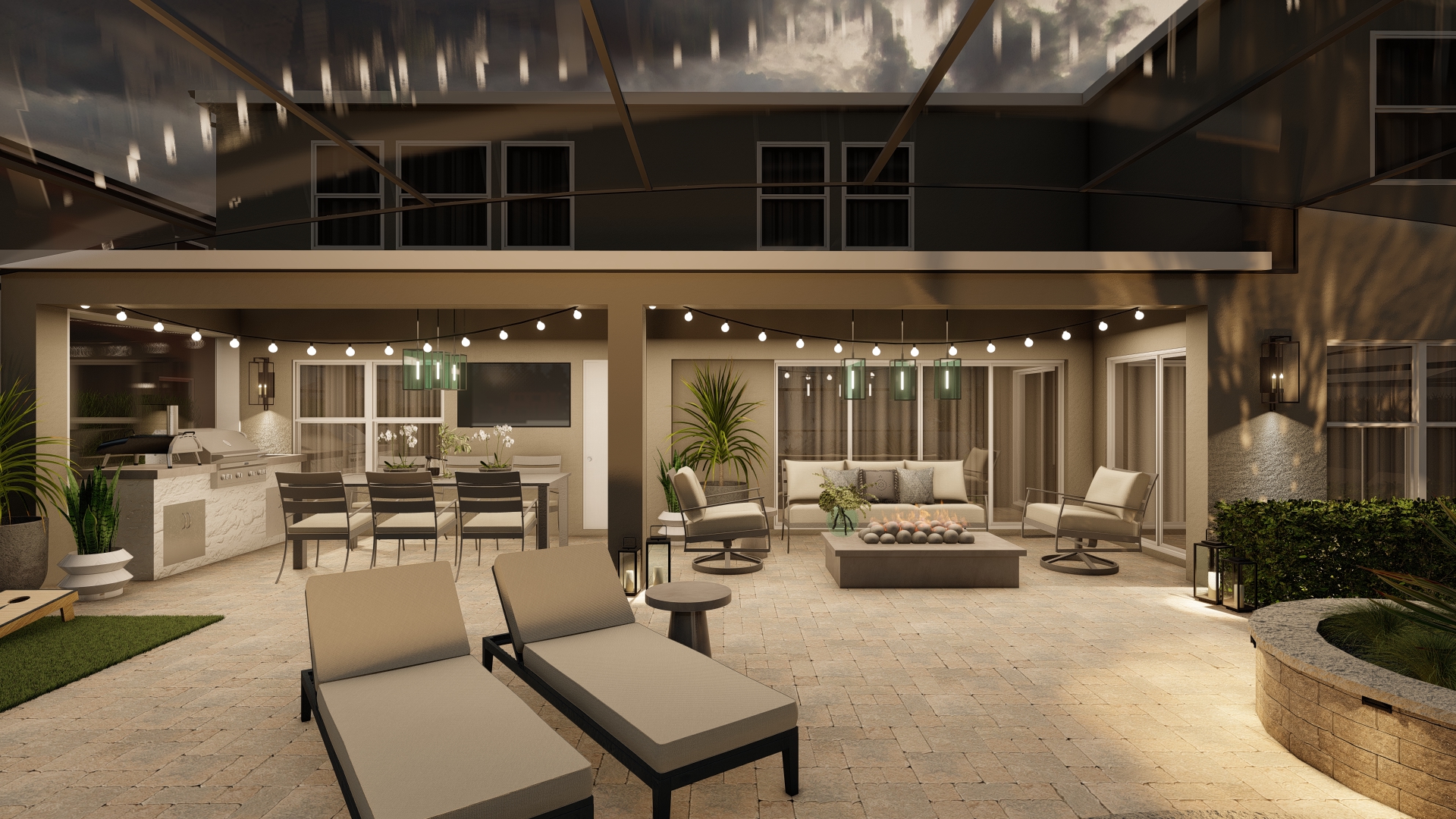
Task lights are the least glamorous yet purposeful among the three layers. These lights are designed for activity zones, for instance, to cook, dine, or grill. If you have a grill station with proper task lights, you don't have to guess whether your chicken’s cooked or not because it's well-lit.
An outdoor kitchen always requires decent light for better performance. The host cannot be struggling for visibility, especially after the sun’s down. In this case, undercabinet LED strips or downlights mounted to the underside of the hood or pergola beam directly over the counter fix the problem. If you are designing an entertainment yard with high foot-traffic, then pathway markers or step lights at 6-8-foot intervals along any transition between zones are the best choice to prevent trip hazards.
All these task lights run on the electrical conduit that should be roughed in under the hardscape during phase one. Otherwise, you have to use surface-mounted conduit or break up finished paving to install them afterwards, which is costly too.
Accent Light
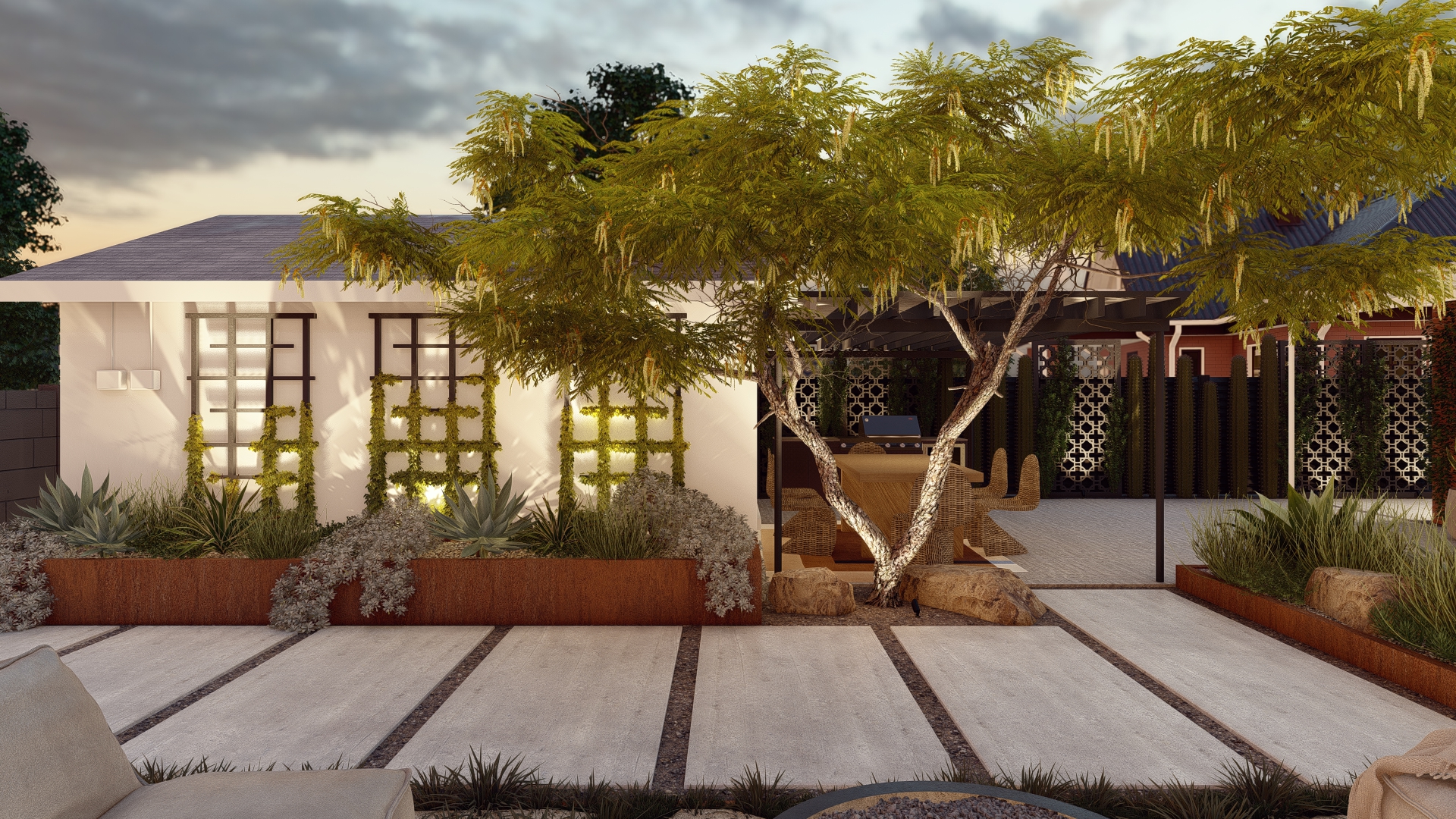
Accent lighting is the layer that actually adds glamour and a wow-factor to your outdoor space. It is the layer where you can be creative and add visual depth by using the focal points, like a tree canopy, a plant bed, pool, garden wall, or an architectural feature. The accent lights aimed at nothing in particular create glare rather than depth.
Most effective accent lighting techniques include mounting downlights high in the trees, pergola beams or house walls, underwater lighting in the pool, and step lighting that grazes across a vertical surface in the yard. This layer turns an ordinary design feature into captivating nighttime spectacles. Furthermore, you can check this guide on How to Design an Outdoor Living Space to see how accent light integrates with zone planning and beautifies your backyard.
For instance, a homeowner in the Bay Area had a large oak tree in their yard that was completely invisible in the dark. Adding two uplights at the base of the trunk, angled to wash light up through the canopy, turned the tree into the visual anchor of the entire backyard. The tree became the most attractive spot in the yard because of its well-lit appearance, and the fixture cost only $280 for installation.
Conclusion
The optimal outdoor space is the one that is functional all day and night. Layered lighting is the technique that makes it possible. It is the most important step incorporated while planning the design initially. Our online designers at BACQYARD create a design with all three layers defined clearly. You just hand it to the constructor and sit back, seeing your dream yard being built smoothly.
Schedule a free 1:1 consultation with a BACQYARD designer today and let them know what your yard looks like in the dark. We’ll then design a custom lighting plan built for your outdoor space to make it functional and well-lit.
Related Articles





Ready to co-design your outdoor space?
Start now—secure checkout, no hidden fees. Prefer to talk first? We’re happy to meet you.