Arizona Backyard Ideas That Actually Survive the Heat (and Look Incredible Doing It)
Arizona backyard ideas that actually work in 115-degree heat. Learn how to design for shade, monsoon drainage, desert plants, and the way Arizonans live outside.
Introduction
Most Arizona backyard ideas you find online belong in a catalog, not in the Sonoran Desert. They showcase lush lawns that would bake into straw by noon and patio materials that turn into literal stovetops once the sun hits its peak. Designing for the Valley requires more than just picking pretty plants; it demands a deep respect for 115-degree heat, punishing UV exposure, and the sudden, violent force of monsoon runoff.
You deserve a space that remains a sanctuary throughout the hottest months, not just a view you avoid until November. If you want a functional desert retreat that survives the climate rather than fighting it, you must prioritize heat reflection and sun path analysis over pure aesthetics. Here are a few factors you must consider for your backyard ideas that actually survive the Arizona heat
Start with Shade Structure, Not Furniture
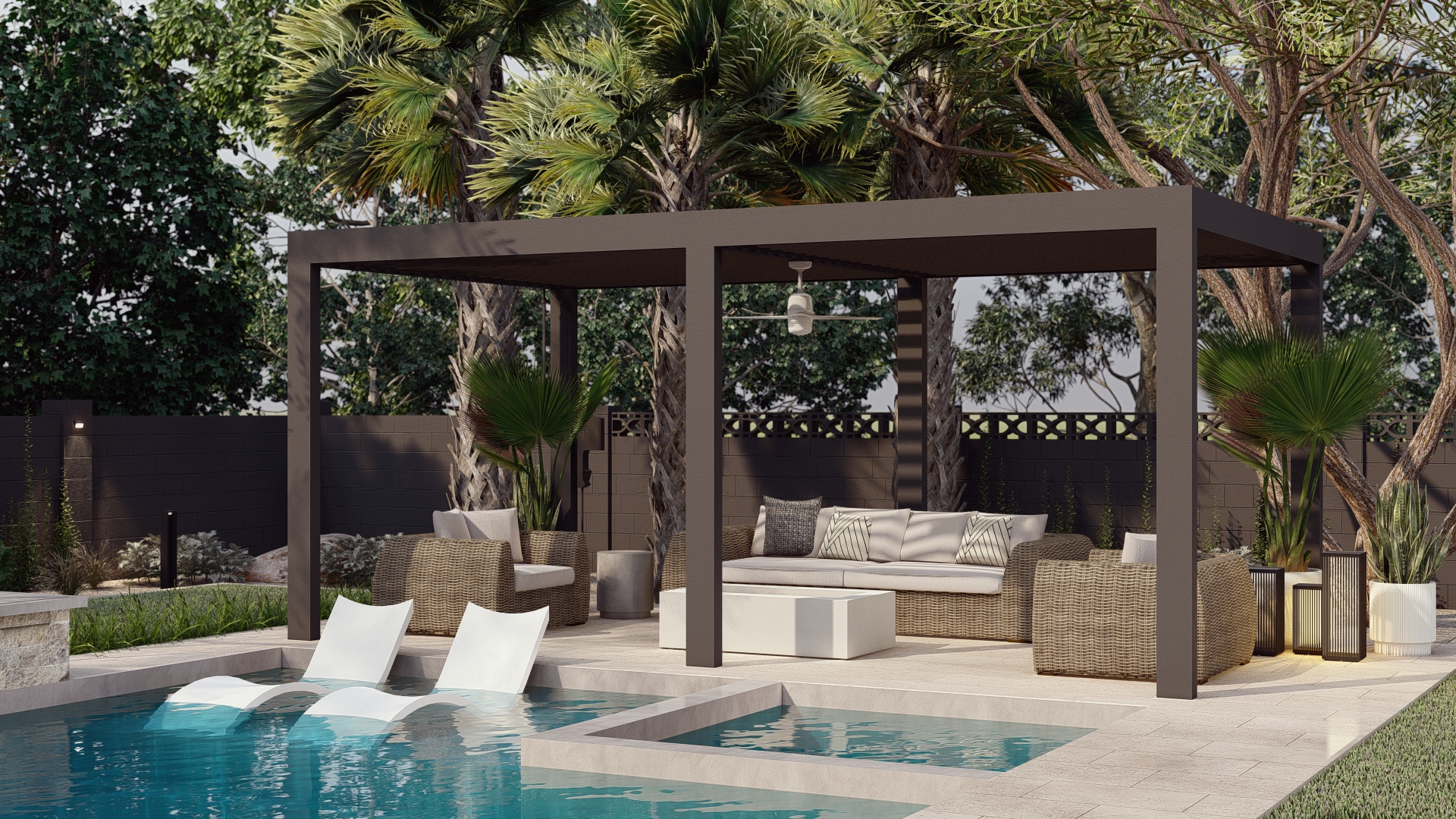
A pergola or shade sail in Arizona is not decorative. It is the essential infrastructure that makes the rest of the yard usable from May through October. The two most common mistakes include placing structures where the morning sun hits when you actually need afternoon coverage, and choosing materials that radiate heat back down at you.
Sun path analysis allows a designer to place shade structures based on year-round patterns instead of where the yard looked sunny on the day you measured. For example, a Scottsdale homeowner with a west-facing patio had to abandon her space by 2 p.m. every summer. The redesign moved her pergola eight feet north and oriented the slats east-west instead of north-south. That same patio now stays usable until sunset. Our guide to pergolas covers how to choose materials and styles that mitigate heat absorption.
Hardscape Material Matters More Than Style
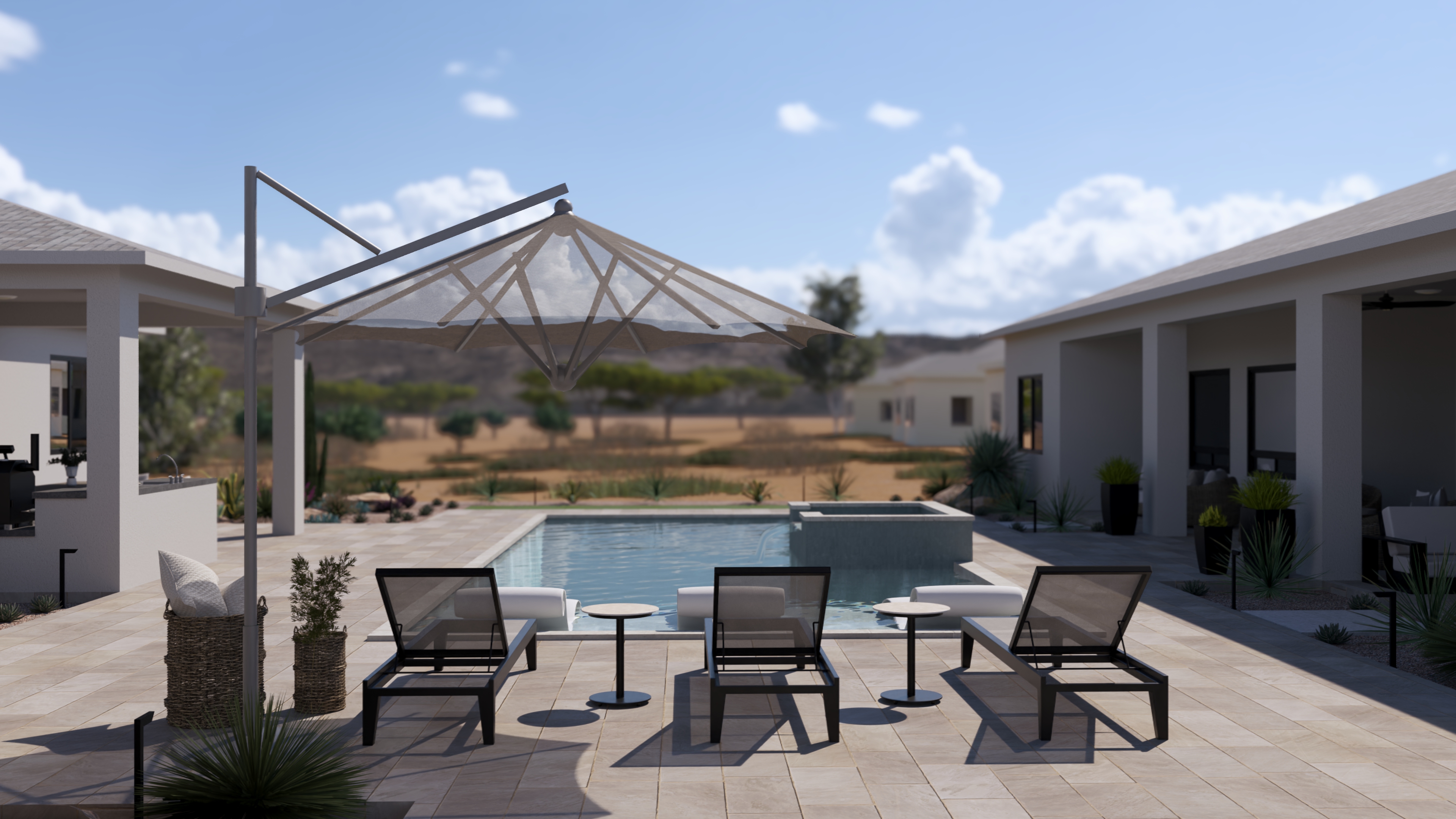
Dark pavers and standard concrete become physically dangerous in Phoenix summers. Surface temperatures can hit 160°F. If you want a yard you can walk across, your choice of material is your most important decision.
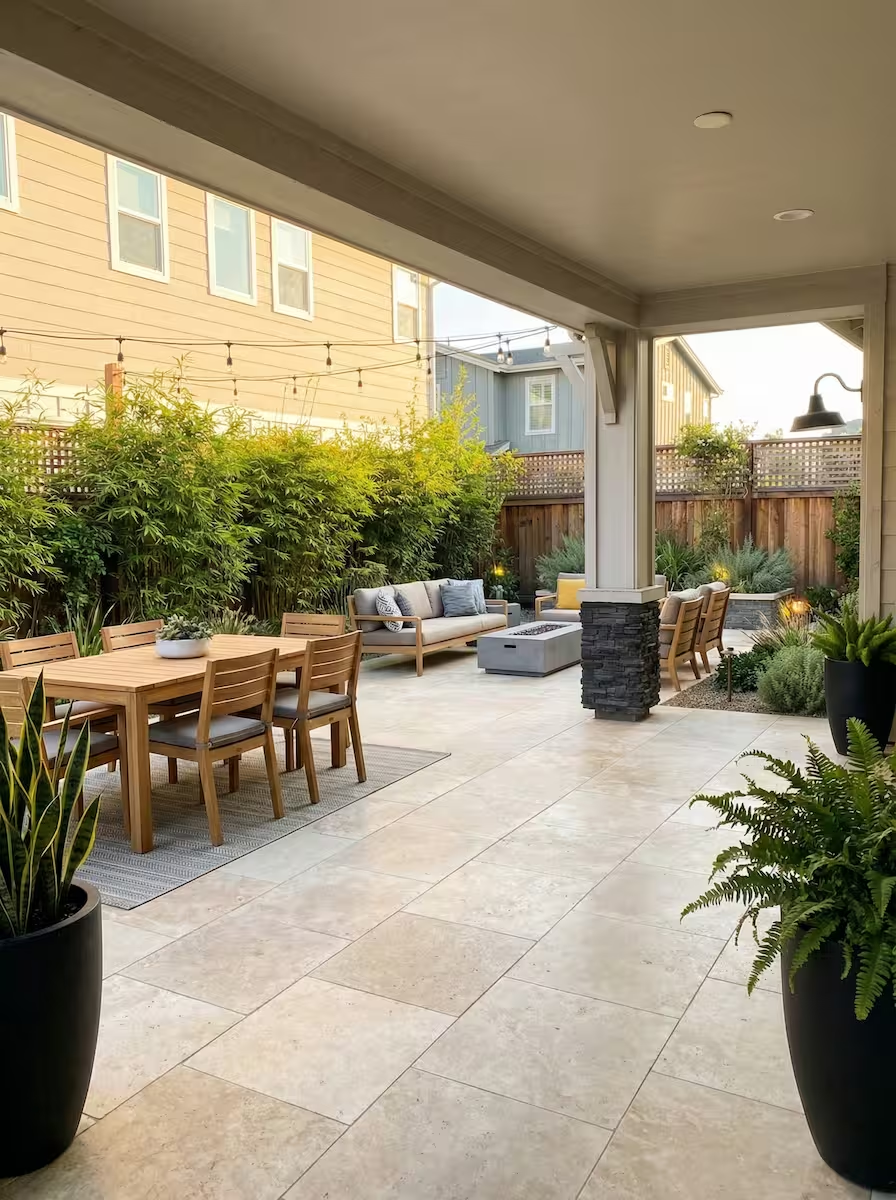
Materials that stay walkable include light colored travertine, decomposed granite, and specific porcelain pavers rated for heat reflection. This decision affects every other choice, from pool surrounds to pet zones.
For instance, a Gilbert family once installed beautiful dark slate pavers around their pool. Their dog refused to walk on them. The redesign swapped the slate for a light travertine that stayed thirty degrees cooler at 3 p.m. The dog, along with the kids, returned to the space instantly.
Desert Plants Are Not Just Cactus
.jpg)
You can build a lush, colorful space using a desert plant palette that actually thrives in Maricopa and Pima County soils. Look toward red yucca, desert willow, Texas sage, agave, ocotillo, palo verde, brittlebush, and lantana. These species offer color year-round and require far less maintenance than imported varieties that quietly die in their first August. Learn more about water-wise landscape strategies to ensure your garden survives.
A Phoenix homeowner wanted a tropical feel. Instead of using high-water plants that would struggle, the designer used desert willow, red bird of paradise, and bougainvillea against a smooth stucco wall to deliver a lush look. Every plant on the list was available at a local nursery twelve minutes from her house. Incorporating native plants is the best way to ensure your design remains resilient without excessive water usage.
Monsoon Drainage Is Part of the Design
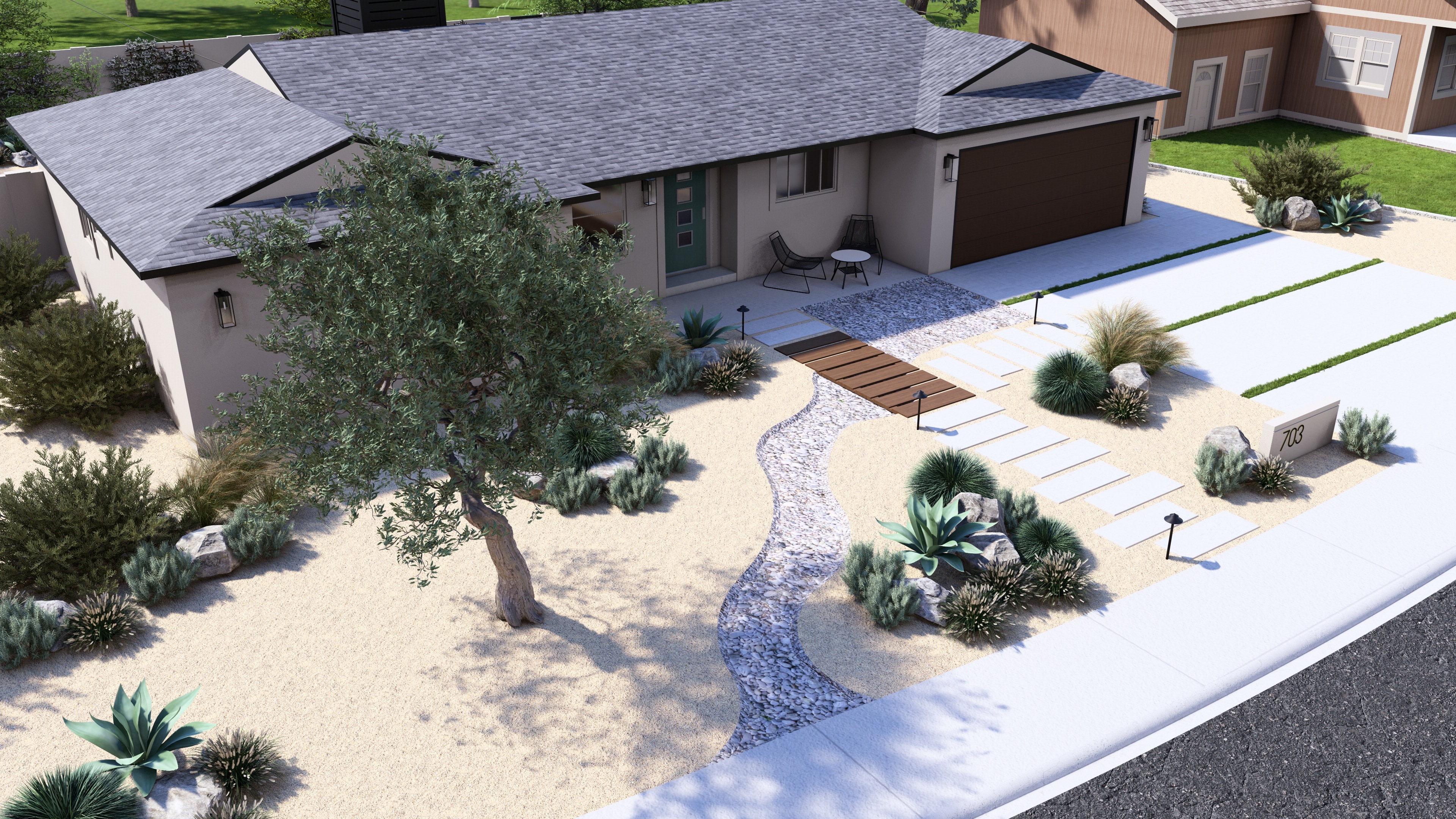
Arizona yards flood differently from yards anywhere else. You experience eleven months of dry, compacted soil, then four inches of rain in an hour. Proper grading, dry creek beds, and strategically placed gravel zones turn monsoon runoff into a design feature instead of a problem. If drainage is skipped, you end up with pooled water in seating areas, washed-out plant beds, and potential foundation issues.
A Chandler property had a low spot that flooded every monsoon and killed three rounds of plantings. The new design used a dry creek bed lined with river rock to channel the water to a gravel basin near the back wall. The flood pattern became a functional feature.
Build Around the Way You Actually Use the Yard
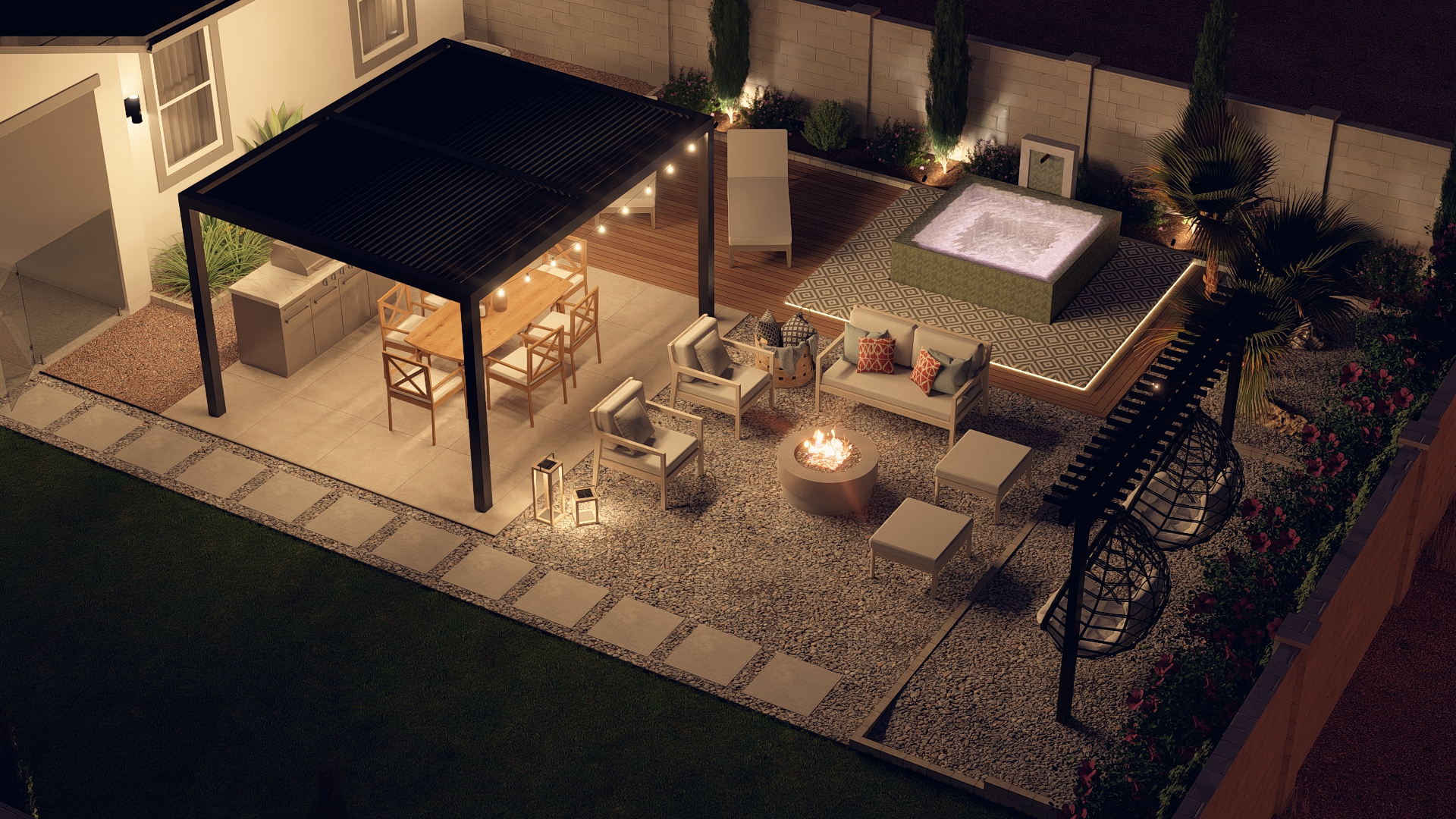
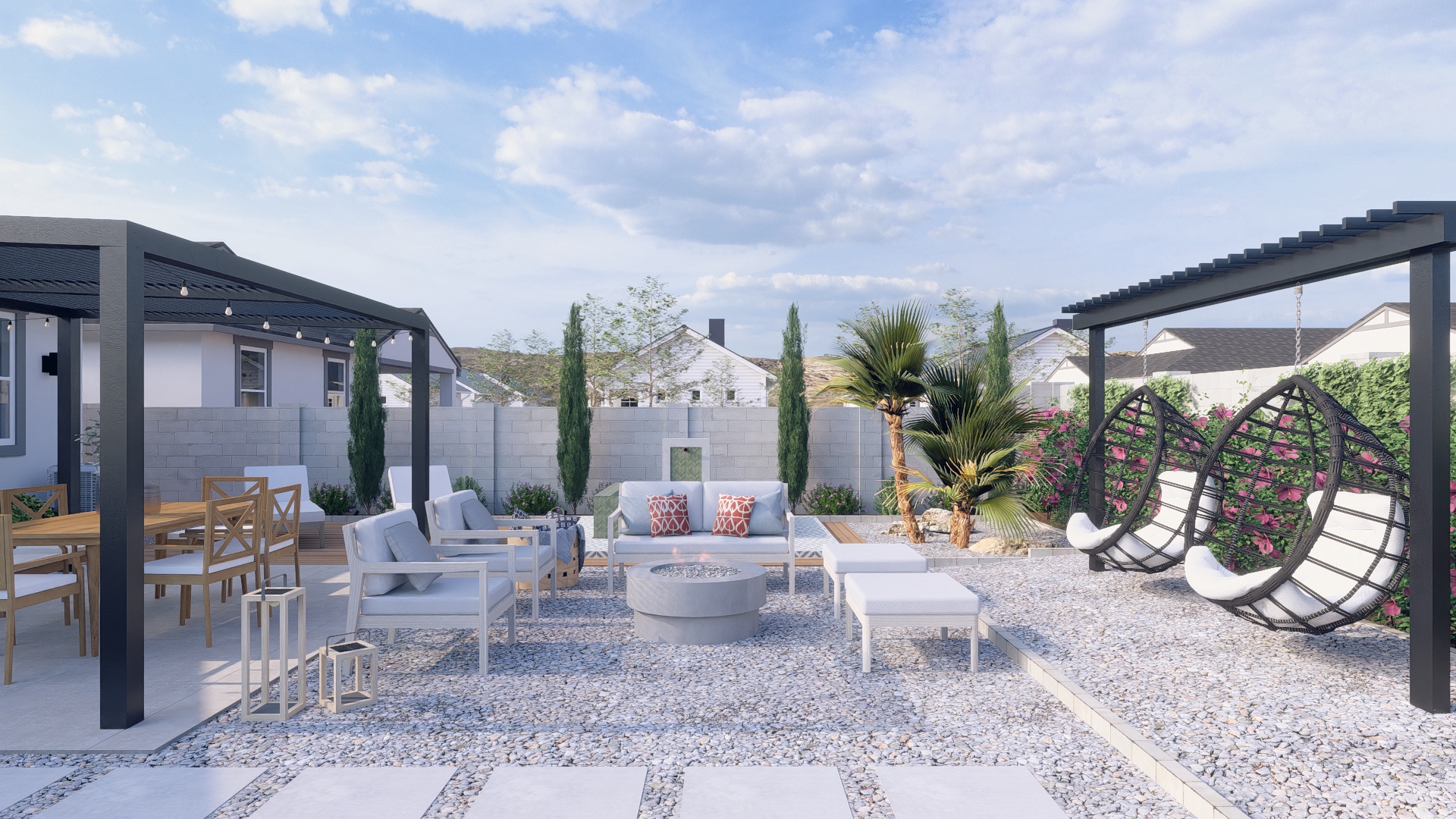
Fire pits in Arizona are not just for winter. They extend the cool evening shoulder seasons into October and back into April. These fire pit planning tips will help you integrate them successfully. Furthermore, pools and outdoor kitchens must be planned together to take advantage of shared utility runs, shared shade, and clear sight lines.
Design the yard for 11 p.m. summer use, not 2 p.m. This shift means lighting, fans, and water features become structural decisions rather than afterthoughts. A North Phoenix couple wanted a pool, fire pit, outdoor kitchen, and pergola. Their first contractor quoted them for four separate projects. A conceptual design plan integrated all four into one utility run and one shaded zone, which brought the total build cost significantly under the original phased estimate. Designing an outdoor living space around the way you actually live is the key to creating a yard that gets used weekly.
You did not move to Arizona to spend your summers staring at the backyard through the window. The right design is not the one that looks the best in May. It is the one that still works in July, drains in August, holds up through the monsoon, and pulls you outside in October when the rest of the country is putting away their grills.
Want a design built for your specific property, your exact sun exposure, and the plants your local nursery actually carries? Schedule a free consultation with a real BACQYARD designer who has worked in your climate zone.
Related Articles





Ready to co-design your outdoor space?
Start now—secure checkout, no hidden fees. Prefer to talk first? We’re happy to meet you.