Portland Landscape Design: How to Build a Yard That Works With the Rain and Still Shines All Summer
Portland landscape design starts with where the water goes. Learn how to build a yard that handles the rain, survives the freeze, and shines all summer.
.jpg)
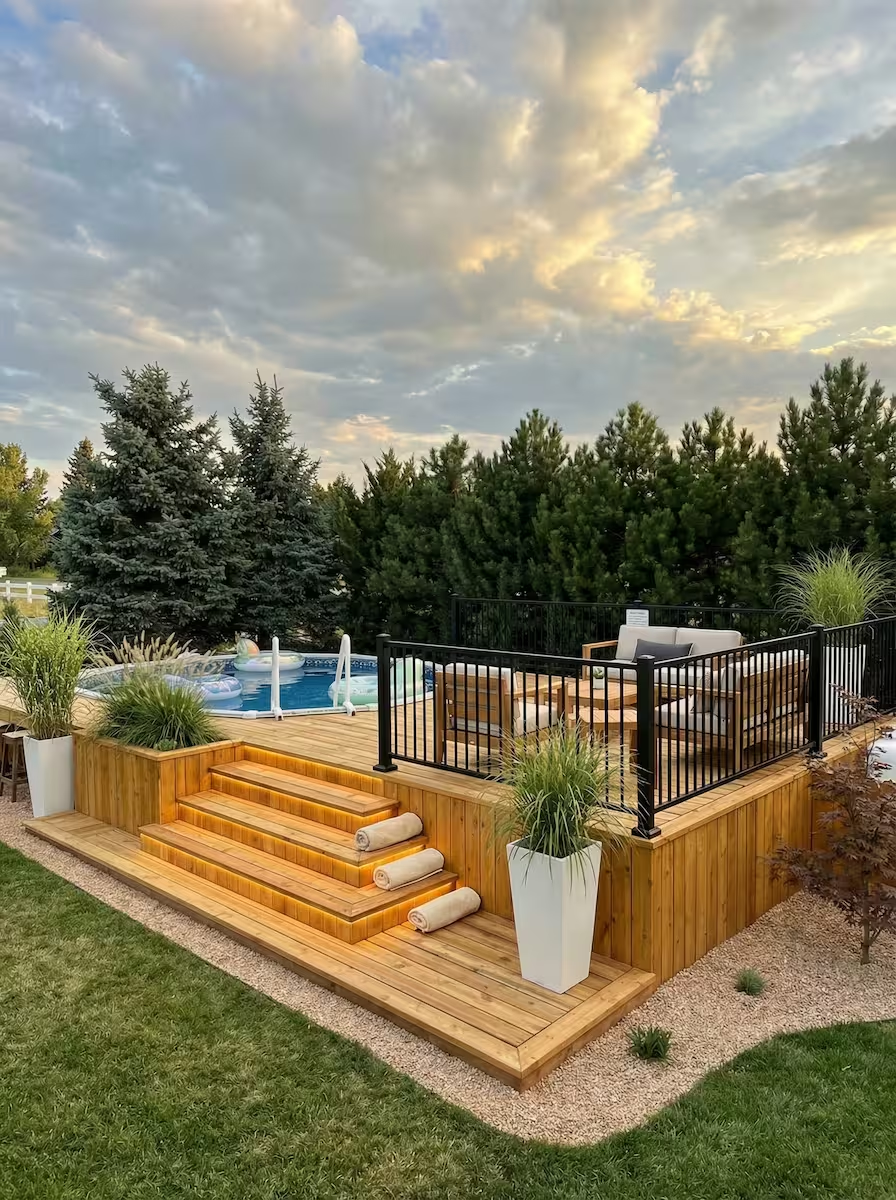
Portland homeowners have a complicated relationship with their backyards. For nine months of the year the yard looks incredible. Everything is green, the ferns are thriving, and the garden has a quiet, layered quality that most of the country can't pull off. Then June shows up, the rain quits, the temperature climbs, and suddenly you have eight weeks of real summer and a yard that was designed entirely for the grey season. A good Portland yard solves both at once. The trick, and this is the part people miss, is knowing which problem to start with.
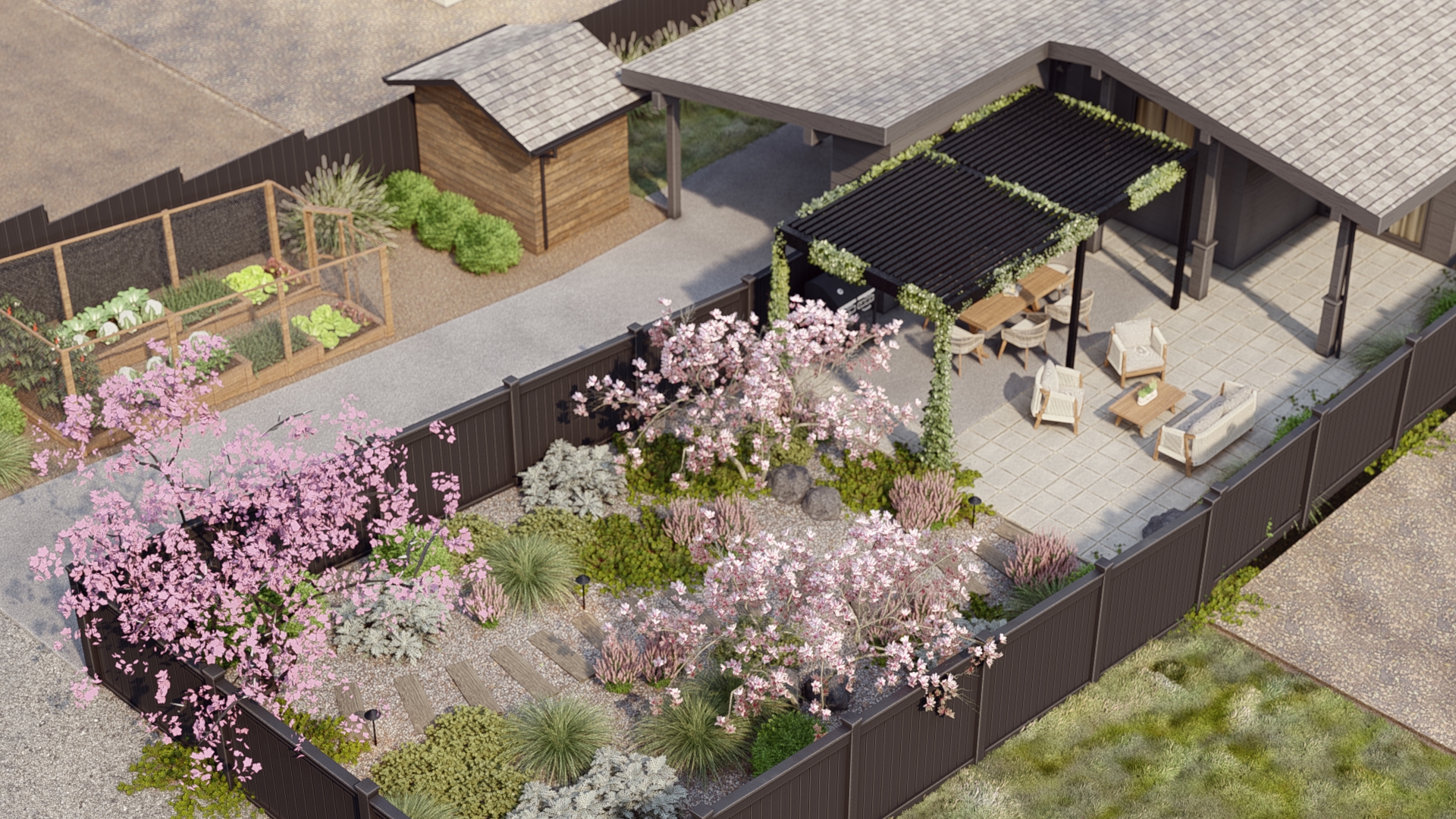
I'll tell you where to start: with where the water goes.
Portland averages around 36 inches of rain a year, and almost all of it falls between October and May. The dry season runs June through September, with July and August genuinely hot. This is not a hard climate to design for. It is a specific one, and the design has to respect that specificity from the very first decision.
Here is what I mean. You can't plan a Portland backyard by starting with the outdoor kitchen and working backward. You start with where the water goes in January, and everything else follows from there. Our clay-heavy soil does not drain quickly. When rain lands on a compacted lot, it sits. That standing water kills plants, heaves pavers, and makes the yard unusable for weeks at a time.
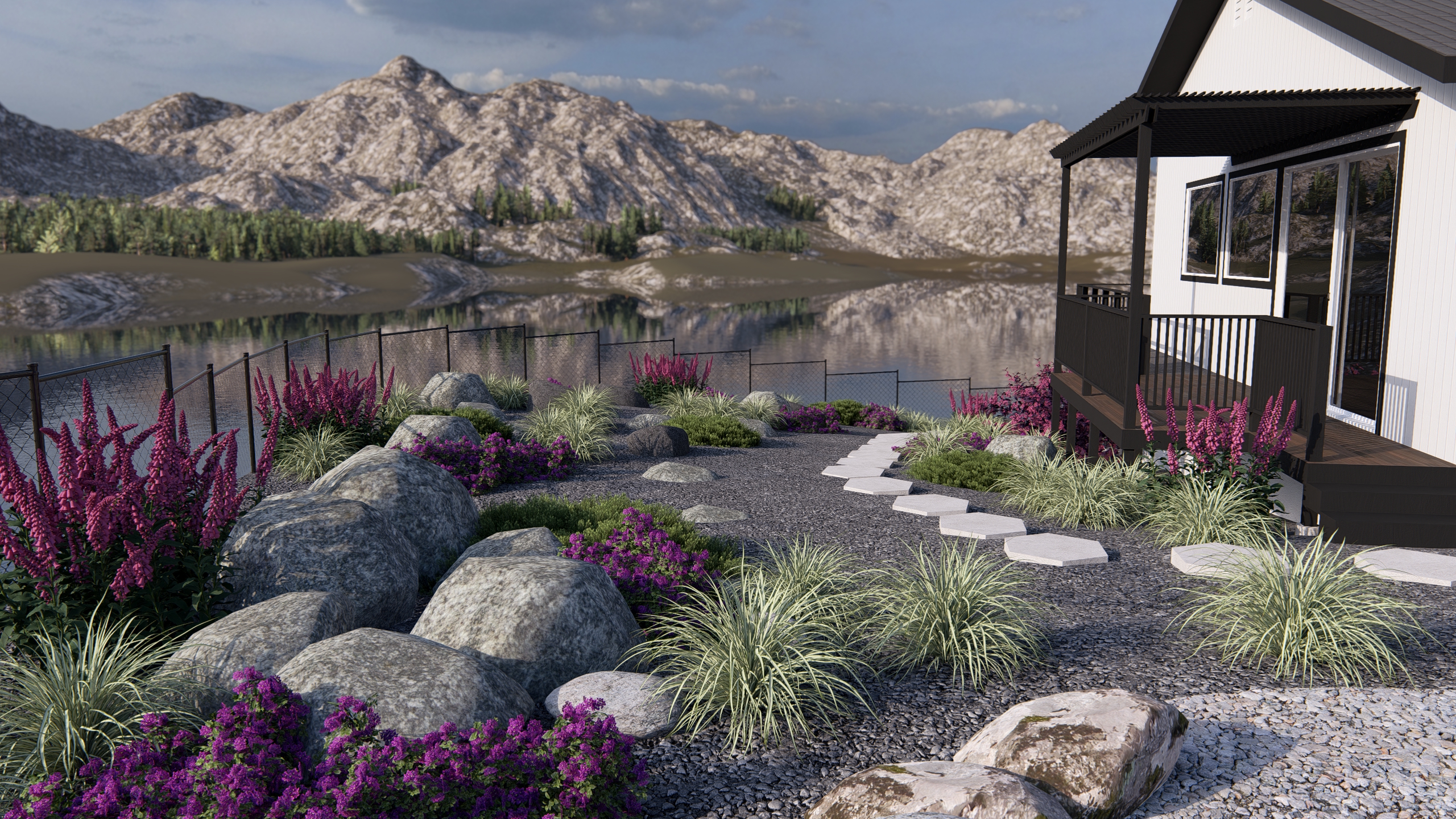
So the practical stuff belongs in the plan from day one, not bolted on later: grading that pushes water away from structures and seating, dry creek beds that move runoff while doubling as a year-round feature, French drains in the low spots, and permeable gravel where the foot traffic is heaviest. These are not add-ons. They are the foundation everything else sits on.
I think of a yard in the Sellwood neighborhood where the back corner flooded every single winter and killed whatever got planted there. Three rounds of plants, all dead in the same spot. Once the drainage got identified as the actual problem, the fix was a shallow dry creek bed lined with river rock and native sedges, with the runoff directed to a gravel basin near the back fence. That problem corner turned into the most interesting part of the garden. The plants made it through their first winter.
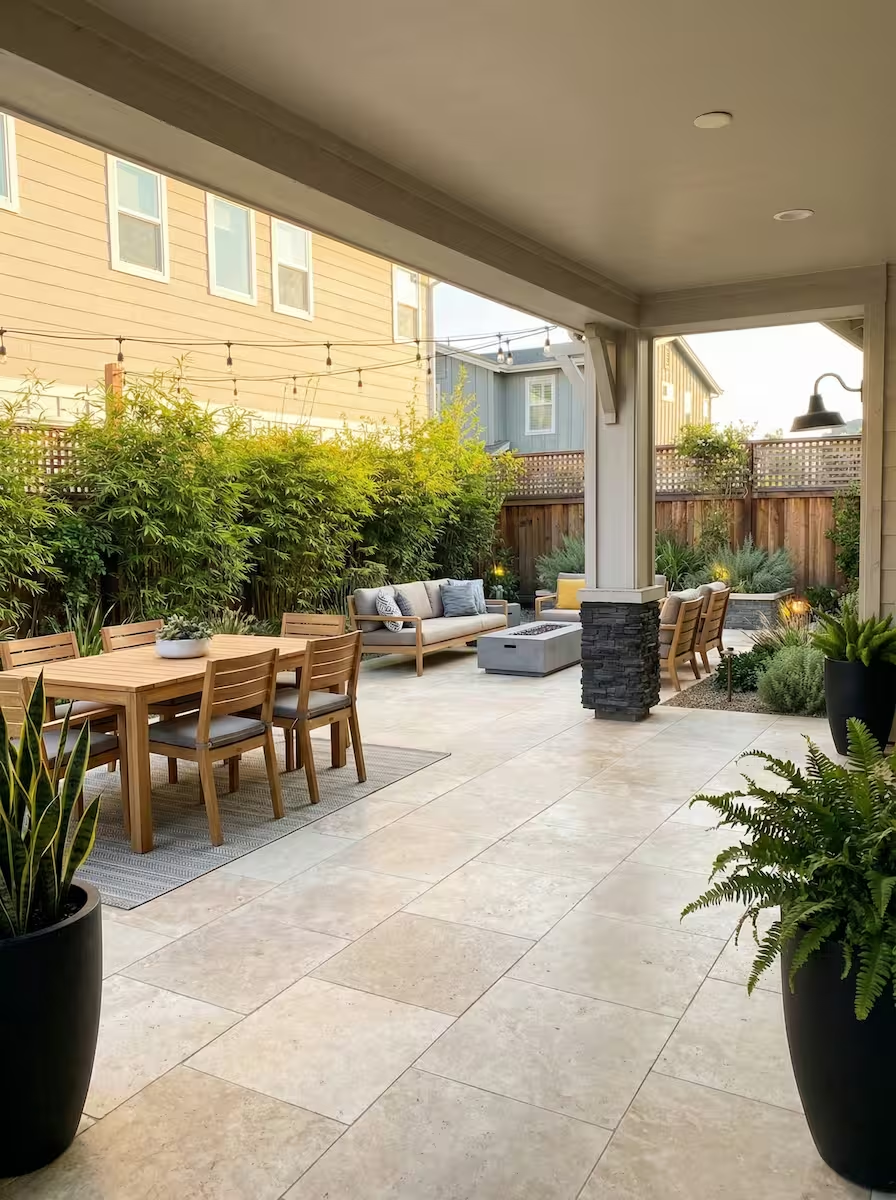
Now for the single biggest decision a Portland homeowner makes. A covered structure is not optional. It is what decides whether you use your yard for four months or eight. An open-air patio here is a spring and summer amenity at best. A covered pergola or an attached patio cover is a year-round room.
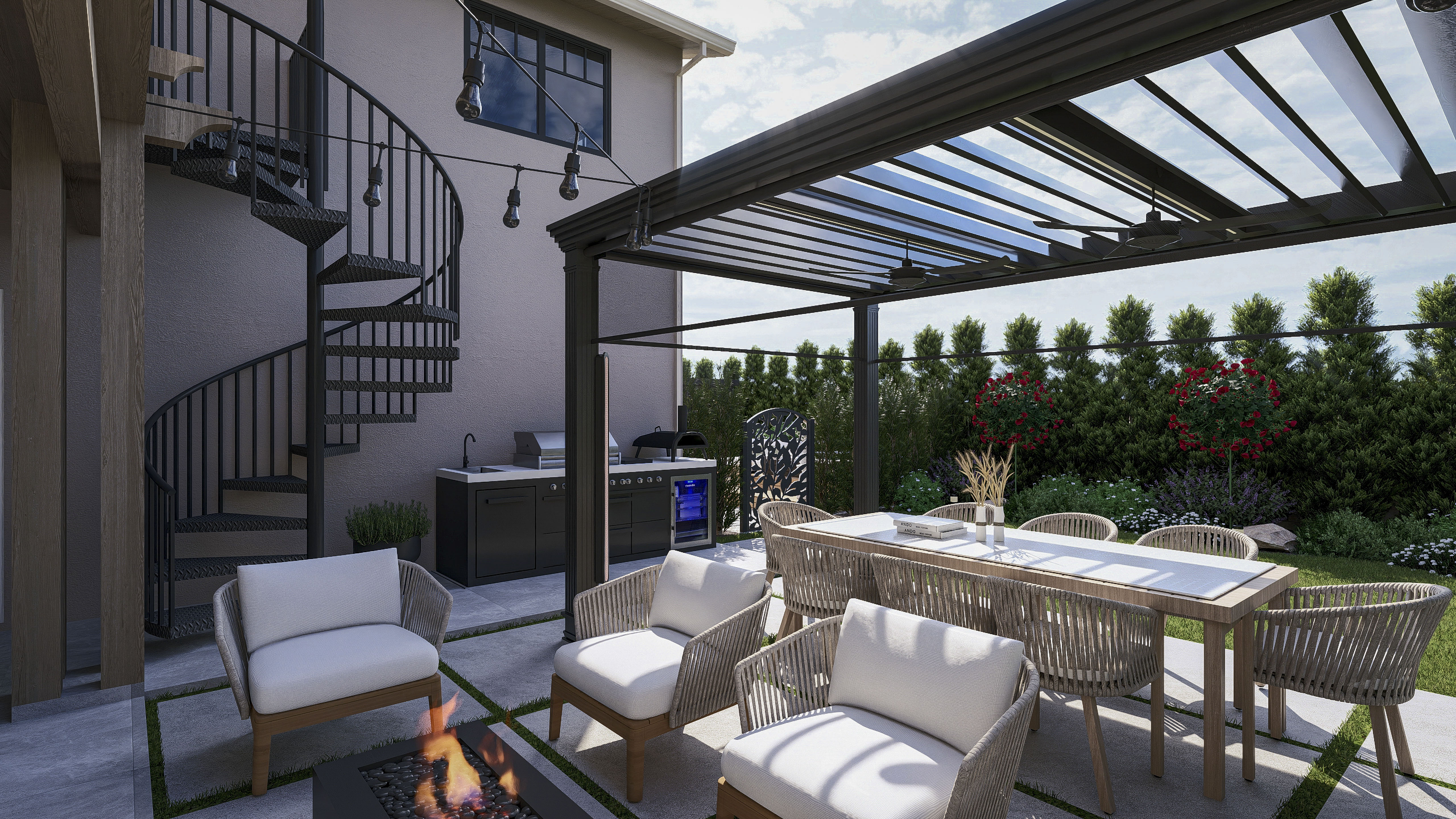
The options come down to budget and how you want it to feel: attached covers that tie right into the house, freestanding pergolas with louvered roofs you can adjust to the weather, and polycarbonate panels that let light through while keeping the rain off. Each one feels a little different. All of them solve the same problem. And don’t skip the fire feature. A gas fire pit or fire table under a cover stretches the season at both ends, into April when the evenings are still cool and back into October when the rain returns but it's still comfortable enough to sit outside with something warm in your hand.
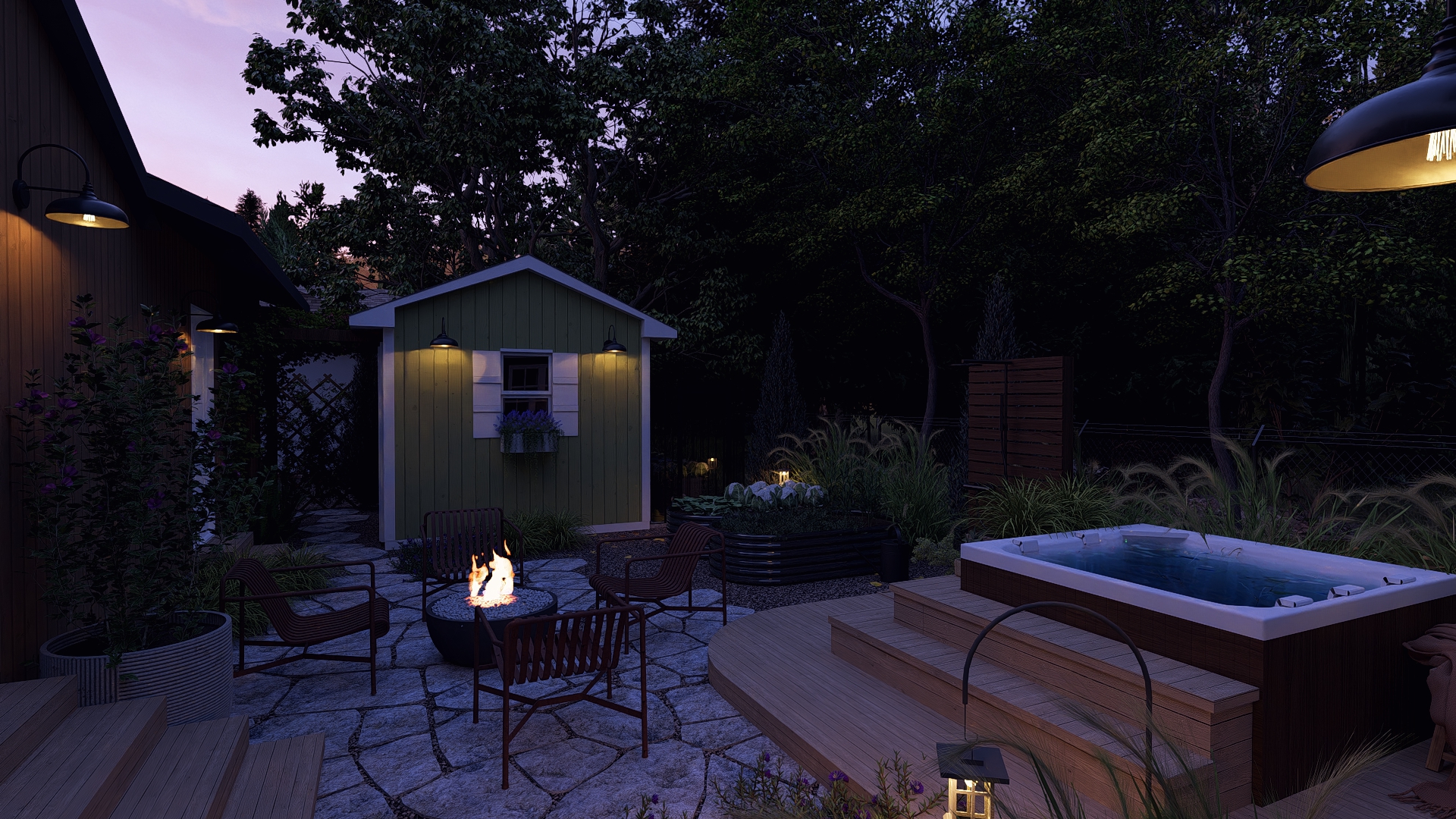
I watched this play out in the Alberta Arts District. A homeowner put up a freestanding cedar pergola with a polycarbonate roof over the back patio, then added a gas fire table and string lighting. By that January they had used the space in every month of the year, including a dinner outside on a dry February evening. The rain hit the roof, the fire was going, and nobody went inside.
Let's talk about plants, because Portland has one of the richest native palettes in the country and one of the most forgiving climates for getting them established. The wet winters do most of the year-one watering for you. Once the right plants settle in, they ask for almost nothing.
The natives worth knowing: red flowering currant, Oregon grape, salal, sword fern, vine maple, Pacific dogwood, and western red cedar for screening. These aren't compromise plants you settle for because they survive. They are genuinely beautiful plants that thrive in conditions that would send an import into decline. The mistakes I see go one of two ways. Either someone picks plants for how they look in the dry months that can't handle six months of wet feet, or they fall for a tropical-looking specimen that gets through one hard freeze and never comes back. Portland gets occasional cold snaps below 20 degrees. Anything that can't take that belongs in a container.
A homeowner in Lake Oswego wanted a lush, tropical feel and came in set on banana plants and cannas. We steered them toward giant chain ferns, fatsia japonica, Japanese forest grass, and rodgersia instead. The result reads as architectural and lush all year, came through two hard freezes back to back without damage, and needs almost no extra water once established.
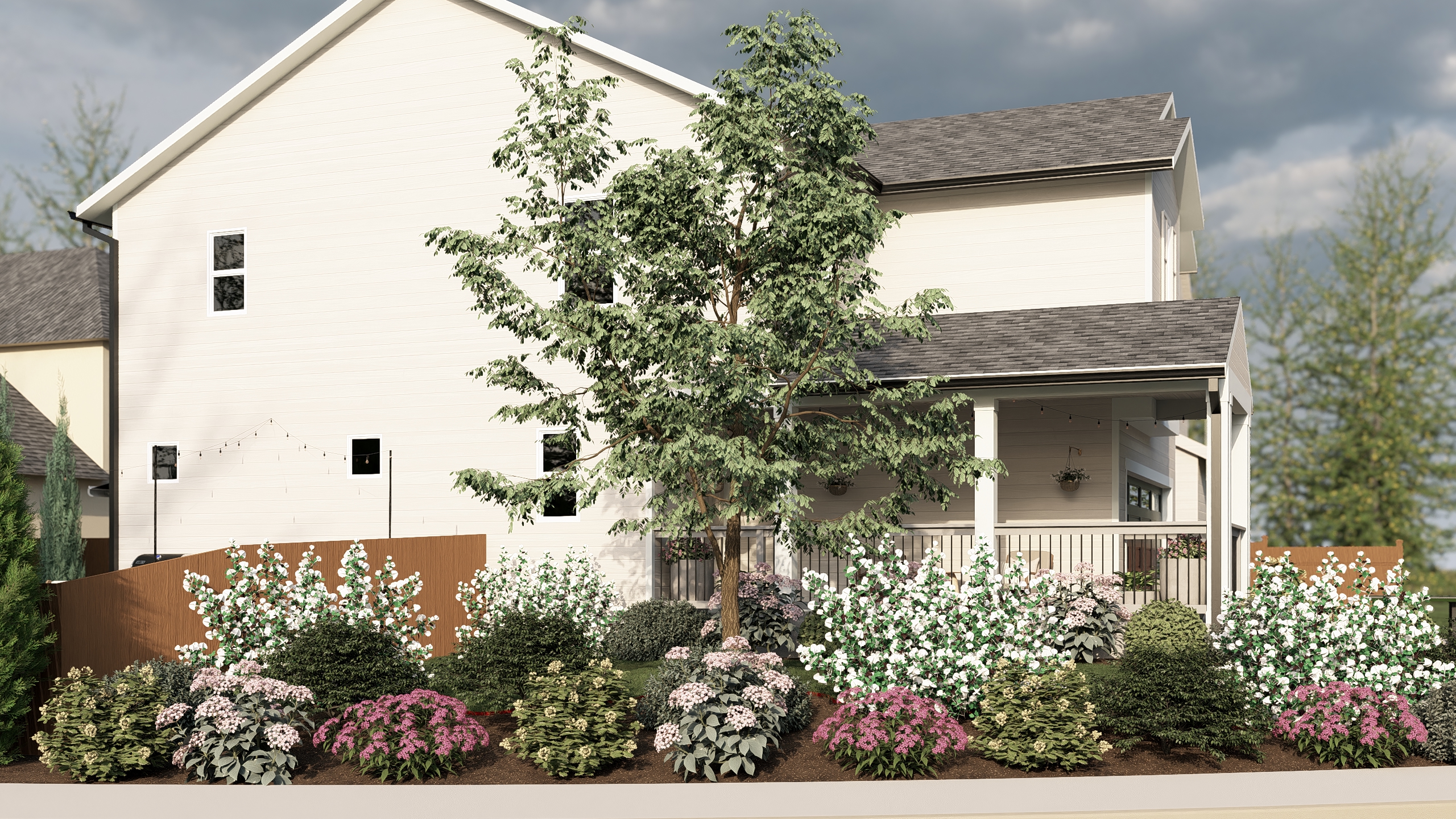
There is one more piece, and it's the one people underrate: layout. Portland homeowners are outdoorsy and garden-focused. They want a yard that feels intentional, not just tidy. The entertaining zone, the garden, and the paths between them have to work as one system, not three separate ideas that happened to land in the same space. And layout matters more here than in most places because the lots are often small, especially in inner Southeast, Northeast, and North Portland. Getting the zones right before anything gets built is what prevents the most common regret I hear: a patio that's too small, a garden bed in the wrong spot, or a path that adds distance instead of connection.
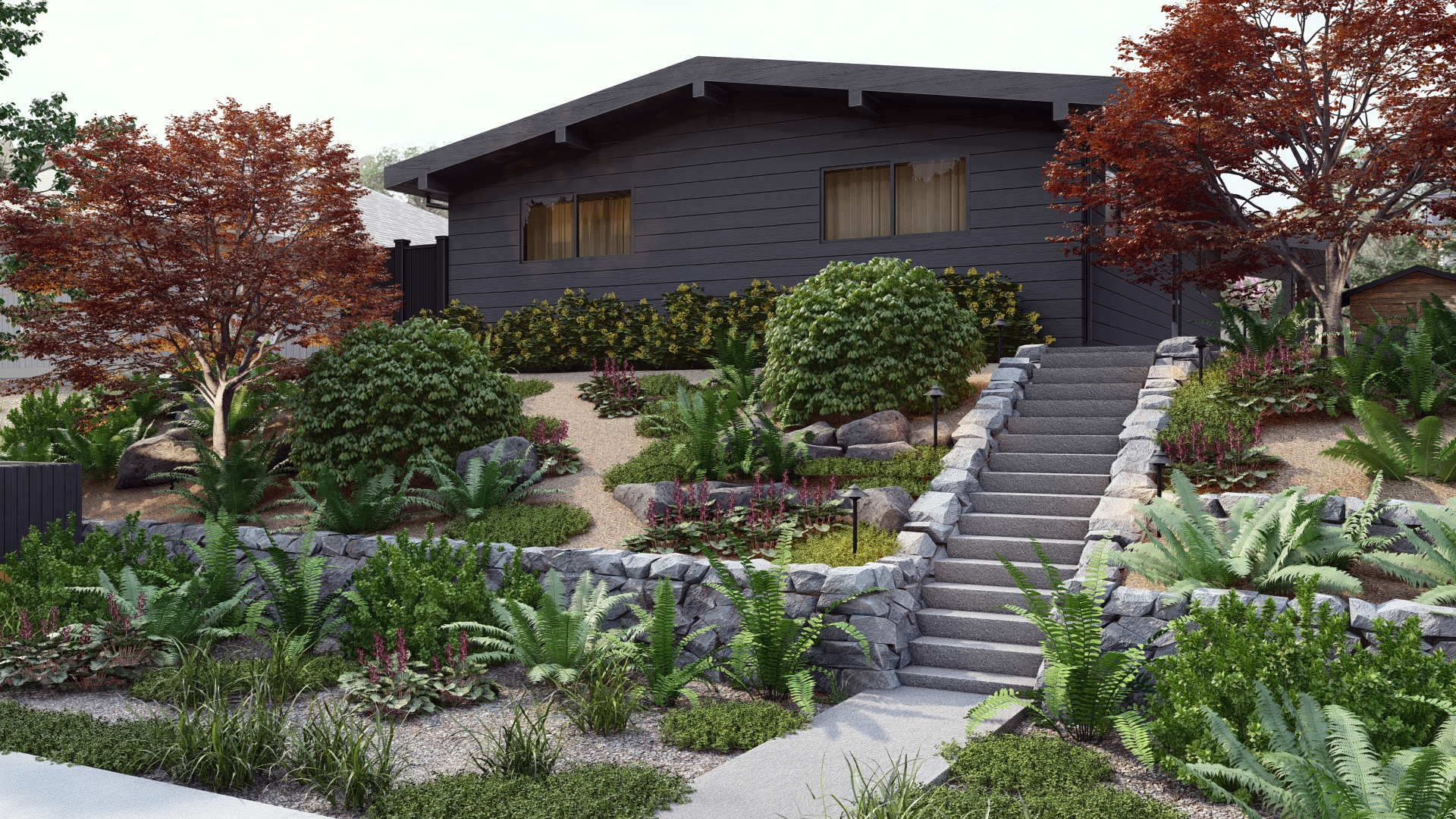
Slope is part of this too. Sloped lots are everywhere in the West Hills and a lot of the inner-city neighborhoods, and a grade change demands a design response. Retaining walls, terraced beds, and stepped paths aren't just structural fixes. Done right, they become the most interesting thing on the property. I think of a narrow, west-facing lot in Irvington that dropped about four feet from the house to the back fence. Two low retaining walls created three terraces: a covered entertaining zone closest to the house, a middle level with raised garden beds, and a lower tier of native plantings buffering the back fence. The slope went from a drainage headache to the defining feature of the yard.
Here is the thing. Portland is one of the best cities in the country to have a well-designed yard. The plant palette is extraordinary. The summers are some of the most beautiful outdoor-living weather you'll find anywhere. And the rainy season, instead of being something to design around, is exactly what makes the garden look the way it does. Build for both seasons and you get a yard you actually use all year.
If you want a designer who starts with your lot and your drainage before anything else, book a consultation with a BACQYARD designer and tell us where in Portland you are. We will build the plan around your property, your water situation, and the way you want to use your yard in every season.
Related Articles
.png)




Ready to co-design your outdoor space?
Start now—secure checkout, no hidden fees. Prefer to talk first? We’re happy to meet you.