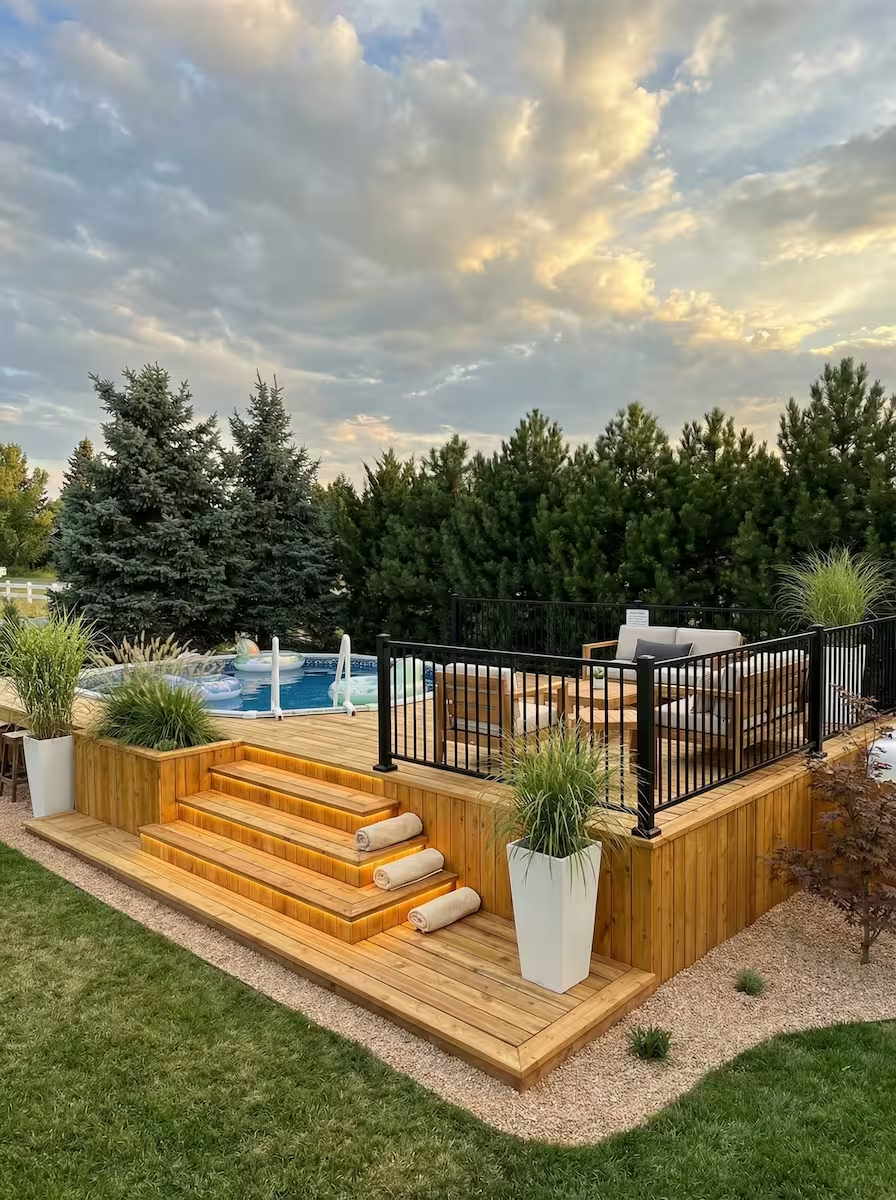
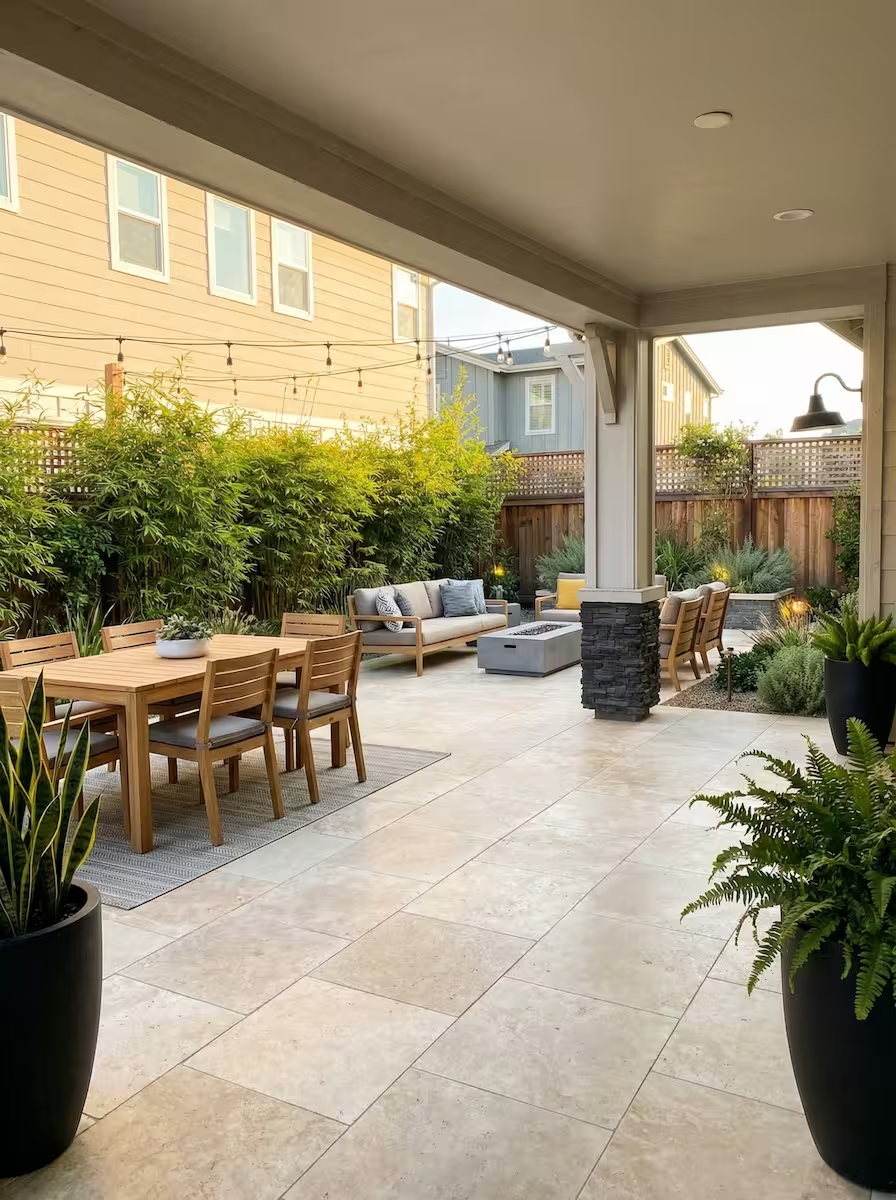
You Did the Research. Now Let’s Make It Buildable.
Your Pinterest boards and AI renders aren't wasted. Learn how a professional landscape design turns your research into a buildable plan contractors can actually quote.
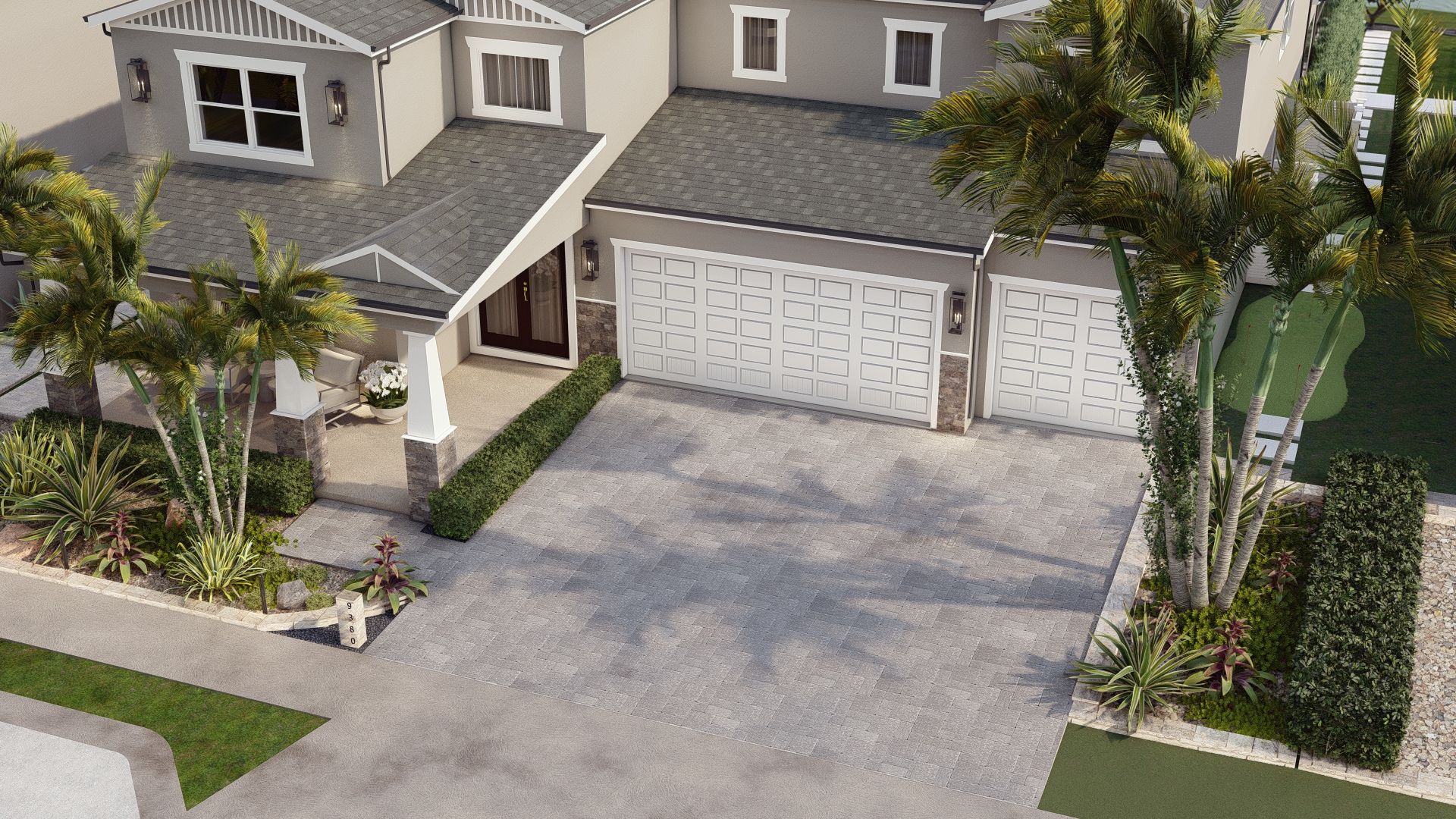
Let’s be real for a second. If you’ve spent the last few weekends scrolling Pinterest, playing around with free design apps, watching YouTube walkthroughs, or feeding prompts into AI tools to see what your backyard could look like, that’s not a waste of time. That’s actually the most important phase of any landscape project. You’re figuring out what you love. You’re building a vision. And honestly, we love it when someone comes to us with a folder full of screenshots and a rough layout they made in an app. It tells us you’ve already done the hard part.
But there’s a specific moment in every project where inspiration needs to become a plan. A real, buildable, hand-it-to-a-contractor plan. And that’s the gap that no app, tutorial, or AI tool is set up to close for you right now. Not because the technology is bad. It’s just not there yet for the stuff that actually matters when someone shows up to your property with a shovel.
Your Vision Is Great. Your Yard Is Complicated.
The thing about free design tools and AI is that they’re working from templates. They’re really good at showing you what a perfect yard looks like in a vacuum. But your yard doesn’t exist in a vacuum. It has specific soil types, drainage patterns that change when it rains, sun exposure that shifts by the hour. These tools don’t know that your neighbor’s massive oak tree casts a deep shadow over sixty percent of your lawn after two in the afternoon, or that your property has a slight slope that naturally sends water right toward your back door.
We recently worked with a homeowner in Arizona who is the perfect example of why this matters. This person was incredibly resourceful. They spent a full weekend using a free design app to map out their dream backyard. On the screen, it looked flawless: a series of decomposed granite paths leading to beautiful raised planters and a heavy seating wall for evening fires. It was a vision they were proud of, and rightly so.
The problem didn’t come up until they started calling contractors for quotes. Every single professional who walked onto the property saw the same glaring issue that the app had no way of catching. There was a major utility easement running directly through the area where they wanted to build that stone seating wall. Building there wasn’t just a bad idea; it was illegal.
They came to us feeling defeated, but here’s the thing. Their research wasn’t wasted. Not even close. Our designers took their existing vision and simply pivoted around the real-world constraints. We caught the easement issues, rerouted the paths, and designed the layout around the existing irrigation lines. The result was the same aesthetic they loved, in a version that could actually be built without a permit nightmare or a call from the city. Their weekend of work in that app gave us a massive head start. We just added the layer they couldn’t get on their own.
The Invisible Stuff Is Where Projects Fall Apart
When you look at a beautiful photo of a patio online, you’re seeing the aesthetics. You’re not seeing the six inches of compacted gravel base underneath it, the specific pitch required to move water away from the foundation, or the edge restraints that keep those pavers from shifting after two winters. And that’s not a knock on you for not knowing that. Why would you? It’s not your job to know it.
Design is as much about engineering and horticulture as it is about beauty. A professional plan accounts for all of that invisible stuff. An AI tool might suggest a gorgeous Japanese maple for your focal point because it matches your color palette. A designer who knows your climate, though, knows that in a west-facing Texas backyard, that maple is going to fry in the July sun before the month is over. We look at what plants are going to do ten years down the road. Will that “cute” shrub you’re planning to put under your kitchen window eventually grow twelve feet tall and block your view entirely? A professional plan also handles the sequencing of the project so you aren’t digging up your new lawn three years from now because you forgot to run the electrical conduit for the lighting.
At BACQYARD, we provide a conceptual design plan that serves as a visual roadmap. It includes your layout, specific material suggestions, and a plant palette tailored to your climate zone. We don’t handle the construction ourselves, and that’s intentional. By remaining an independent design firm, our only goal is to give you a plan that is functional, beautiful, and honest. You take that plan to a contractor, or use it to guide your own DIY installation, with the peace of mind that the math has already been done for you.
Your Saturdays Are Worth More Than You Think
We often talk about the financial cost of a landscape project, but we rarely talk about the cost of your time. And look, the DIY research route is rarely “free” when you actually add it up. We’re talking twenty to forty hours for most homeowners. That’s hours spent researching which base material works best for your climate, second-guessing whether a certain plant is invasive in your zone, and redoing your layouts every time you realize a measurement was off by six inches.
At some point, you have to ask yourself what your Saturday is worth. Is it worth a few hundred bucks to get those forty hours back and receive a finished, professional plan that you know will actually work? Our process is designed to be the easy button for busy homeowners. It starts with one consultation call where we listen to your goals, look at your photos, and understand your budget. From there, we handle the heavy lifting. You get to skip the frustration and go straight to the excitement of seeing a plan that finally makes sense for your space.
A professional design also saves you time during the bidding process. This is the one that surprises people the most. If you approach three different contractors with nothing but a vague idea in your head, you’re going to get three wildly different quotes that are impossible to compare. One guy is quoting you for premium materials, another is skipping the drainage prep to keep the price low, and you have no way of knowing which is which. When you hand them a detailed plan with CAD drawings and specific materials, you’re asking for an apples-to-apples comparison. That forces transparency and saves you from weeks of back-and-forth negotiations.
We’re Not Replacing What You’ve Done. We’re Building on It.
Free tools and AI are fantastic for the dreaming phase. Seriously. The research you’ve done, the images you’ve saved, the sketches you’ve drawn on napkins at dinner, all of that has value. It means you know what you want. Most people never get that far. You’re already ahead.
But there’s a specific moment where that inspiration needs to become something real. Something with measurements, grading, drainage, plant specs, and material callouts. Something a contractor can look at and say “yep, I can build that, and here’s exactly what it’ll cost.” That’s what we do.
If you’re standing on your porch right now looking at your yard and feeling overwhelmed by all the what-ifs, let’s have a conversation. You don’t have to figure out the engineering or the horticulture on your own. You’ve done the thinking. Let us do the planning.
Book a free consultation. Tell us what you’ve already figured out on your own. Bring the Pinterest boards, the AI renders, the napkin sketches. We’ll build on all of it. Your research wasn’t wasted. Let us turn it into something buildable.
Related Articles
.png)




Ready to co-design your outdoor space?
Start now—secure checkout, no hidden fees. Prefer to talk first? We’re happy to meet you.