Landscape Design for Austin Yards
A real designer, 1-on-1, online. Plans your Austin contractor can build from, around one watering day a week.
Austin yards fail two ways. The heat sits above 100°F for weeks, then a February ice storm takes down whatever survived it. A plan that works here starts with shade, alkaline soil, and one legal watering day a week.
As seen in:







.avif)
Zone 9a on paper. We plan for 8b.
The 2023 USDA map moved most of Austin from 8b to 9a. Do not design to that number. Camp Mabry hit 7°F in the February 2021 freeze and stayed at or below freezing for six straight days. January 2024 hit 16°F. Anything structural gets specified to 8b or colder.
Ice is the other failure mode. The February 2023 storm damaged about 10.5 million Austin trees, close to 30% of the canopy. Brittle fast growers like Arizona ash and Bradford pear are what land on the patio.
July normals run 97°F and August 98°F. Austin now averages 29 days a year at or above 100°F. Summer 2023 ran 45 in a row.
Rain averages 34 to 36 inches, but 2022 came in nearly 10 inches short. We plan for the dry year.
Soil splits at I-35. Deep cracking clay to the east, thin caliche over limestone to the west. Both run alkaline, so azaleas and gardenias yellow out.
Austin Water allows in-ground irrigation one day a week. Wednesday for odd addresses, Thursday for even.
Plants that hold up here
Austin's Grow Green guide codes native plants by soil region. E is the limestone west side. B is the Blackland clay east of I-35. It also names nandina, ligustrum, vitex and Chinese pistache as invasives to avoid, and every nursery in town still sells them. Here is what goes in the plan instead.
Escarpment Live Oak
Quercus fusiformis · Austin native
The default evergreen shade tree, and tougher than Southern live oak in shallow limestone.
Cedar Elm
Ulmus crassifolia · Austin native
Takes heavy compacted clay and rocky soil on the lowest water rating in the city guide.
Lacey Oak
Quercus laceyi · Hill Country native, not a Travis County one
Oak wilt resistant, unlike live oak and red oak, and small enough for an urban lot.
Texas Mountain Laurel
Dermatophyllum secundiflorum · Austin native
Deer resistant evergreen with purple spring flowers that smell like grape bubblegum.
Cenizo, or Texas Sage
Leucophyllum frutescens · Adapted, not a local native
The heat workhorse shrub, as long as drainage is real and nobody shears it into a meatball.
Yaupon Holly
Ilex vomitoria · Austin native
The native evergreen that works in shade, with red winter berries on female plants.
Turk's Cap
Malvaviscus arboreus var. drummondii · Austin native
Fills the dry shade under a live oak, which almost nothing else here will do.
Autumn Sage
Salvia greggii · Adapted, not a local native
Blooms spring to frost and the deer leave it alone.
What Austin yards are actually built with
Covered patio, not pergola. City of Austin permits since 2023 show 5,357 covered patios. Pergolas often skip the permit, so the real gap is narrower than that number looks. The heat argument still holds. A solid roof is the point here.
Pools are mainstream. 783 new residential pool permits in 2025, and 532 already in 2026. Around a quarter include a spa.
The constraint is rarely budget. On a median Austin lot of 8,620 square feet, minus a 2,020 square foot house and a driveway, the back yard runs 3,000 to 4,500 square feet. That is a pool or a lawn, not both.
SF-3 caps impervious cover at 45%, and the Barton Springs Zone cuts it to 15 to 25%. In Circle C and southwest Austin the house and driveway have often spent the whole allowance already. We check those numbers before we draw a patio.
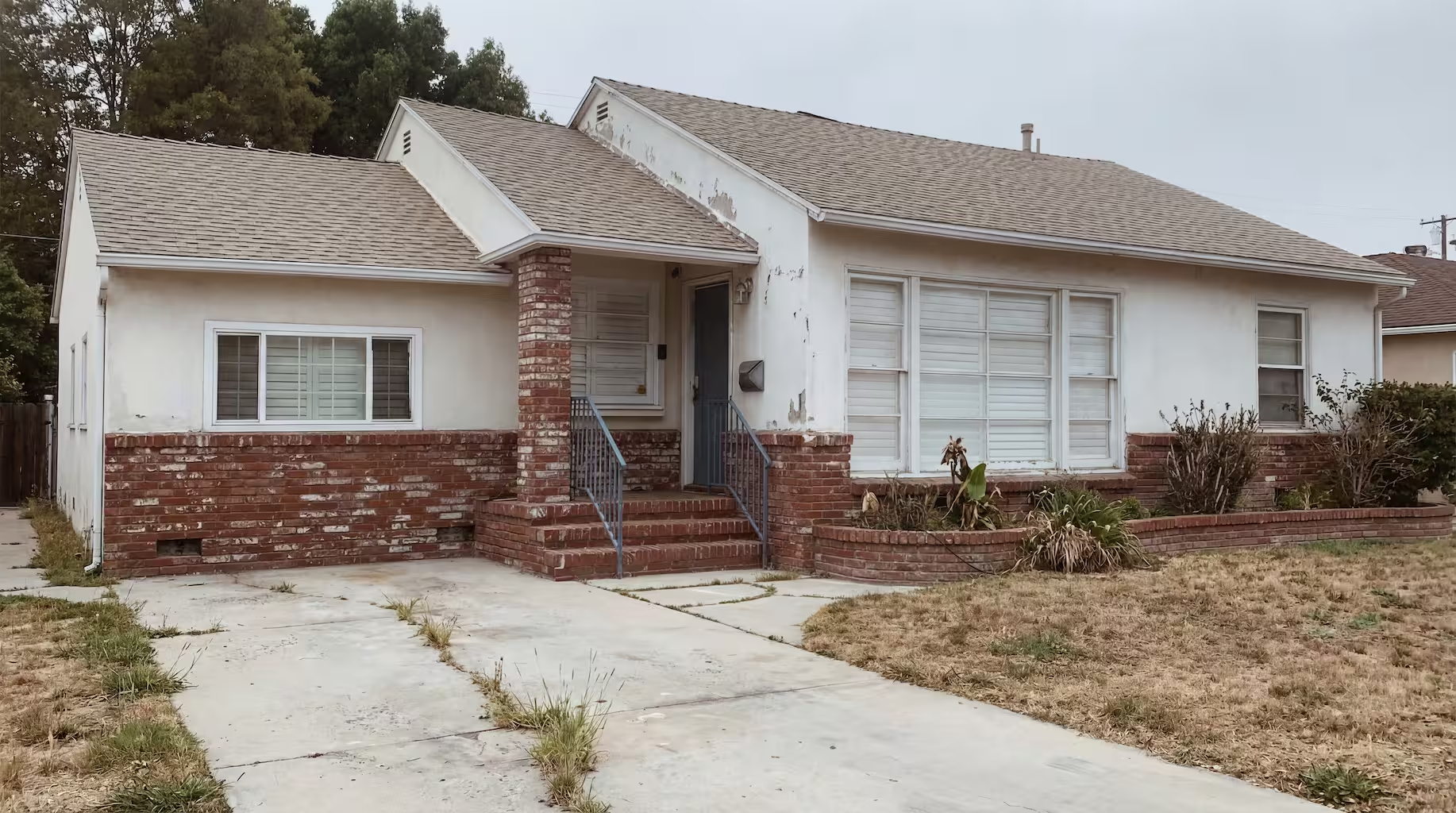
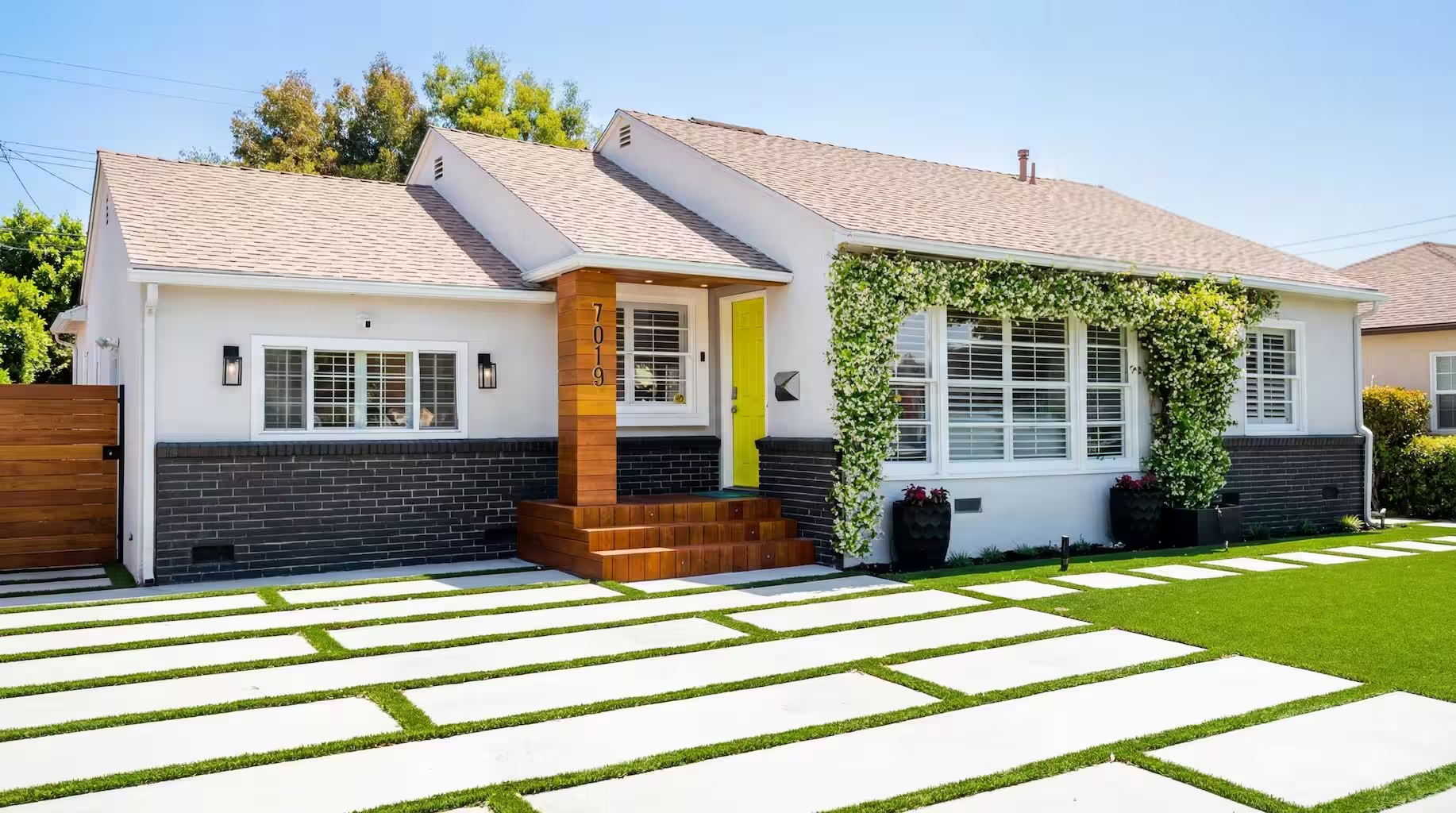
Real Yards, Real Results.
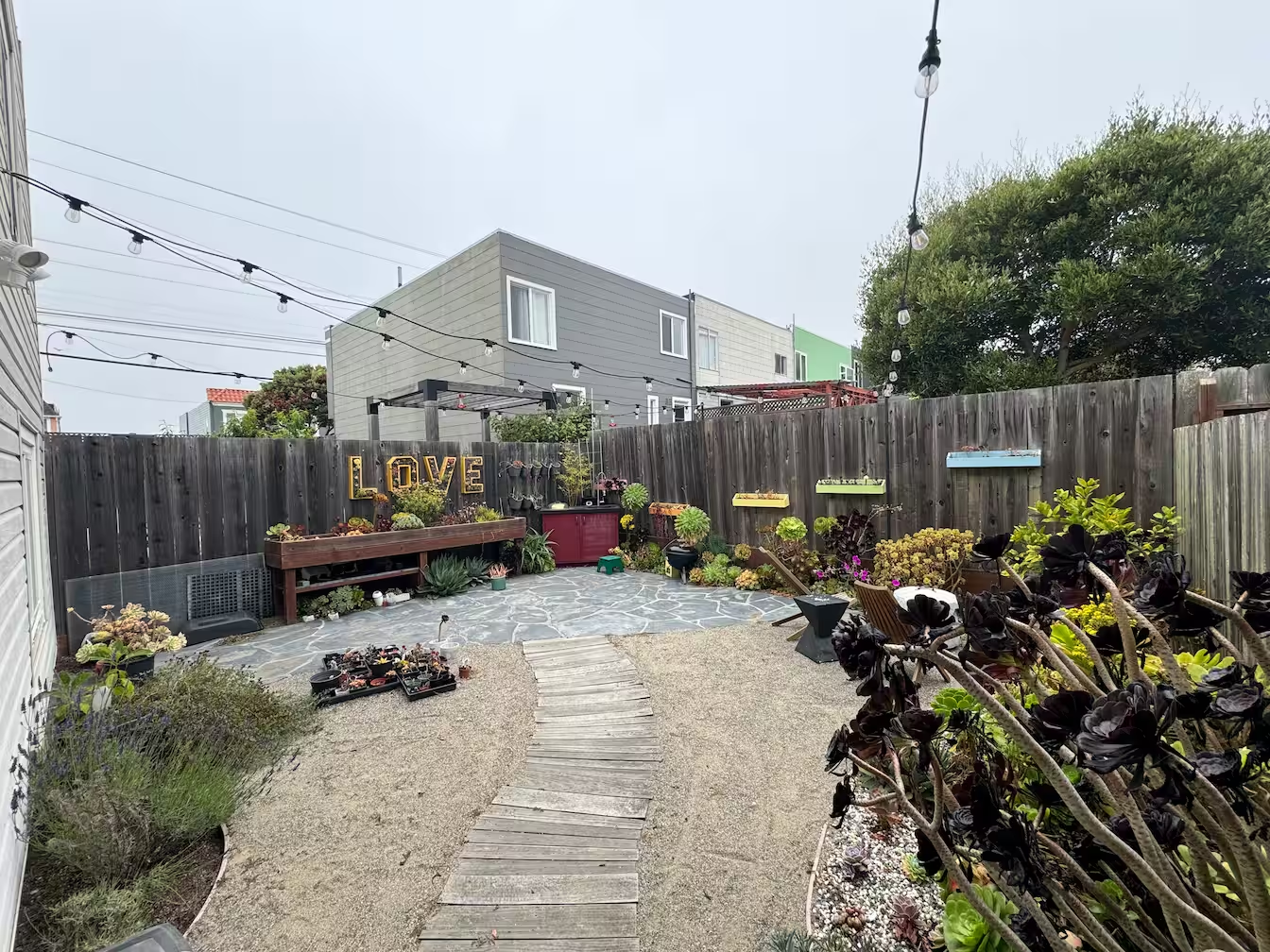
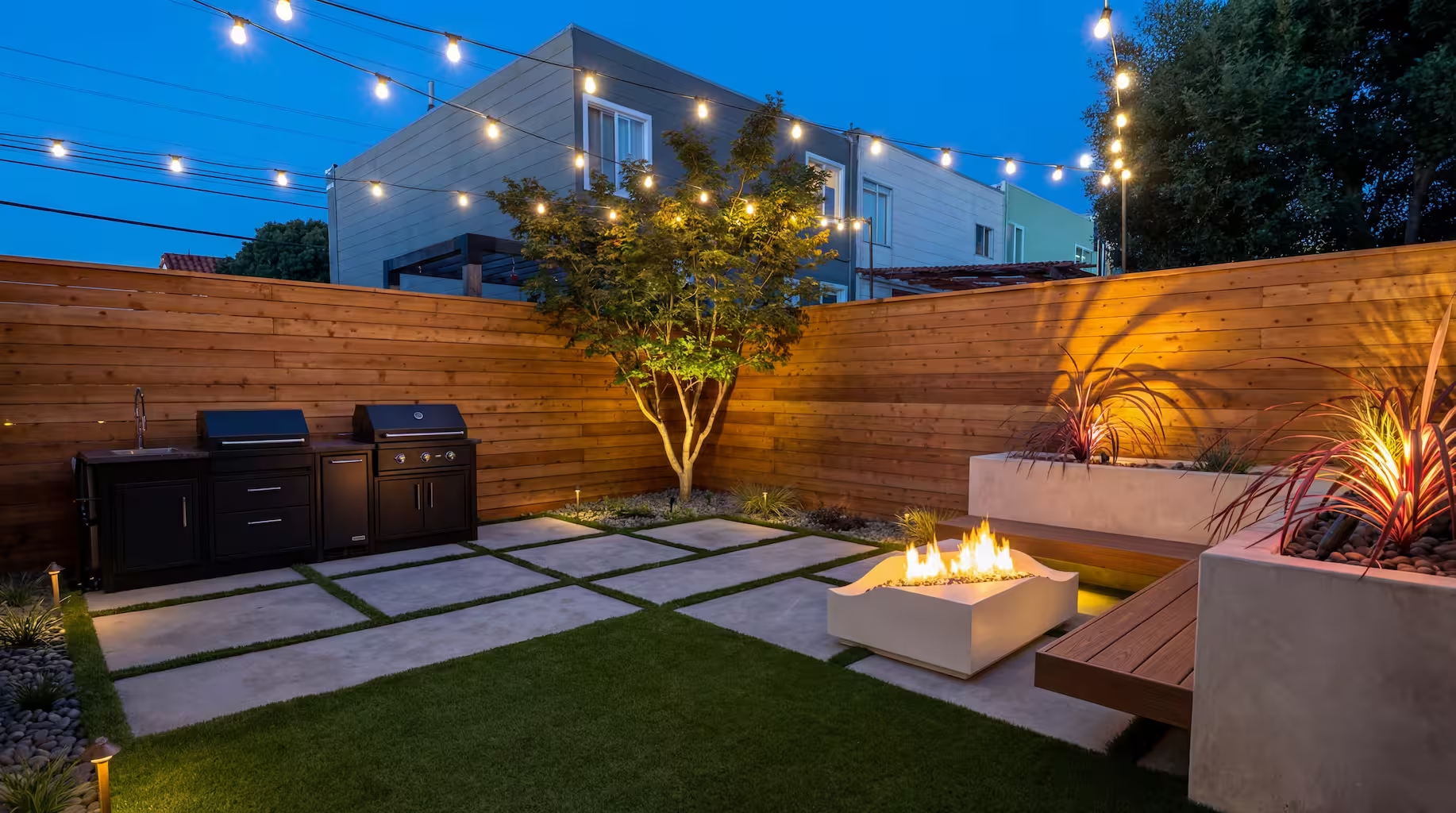
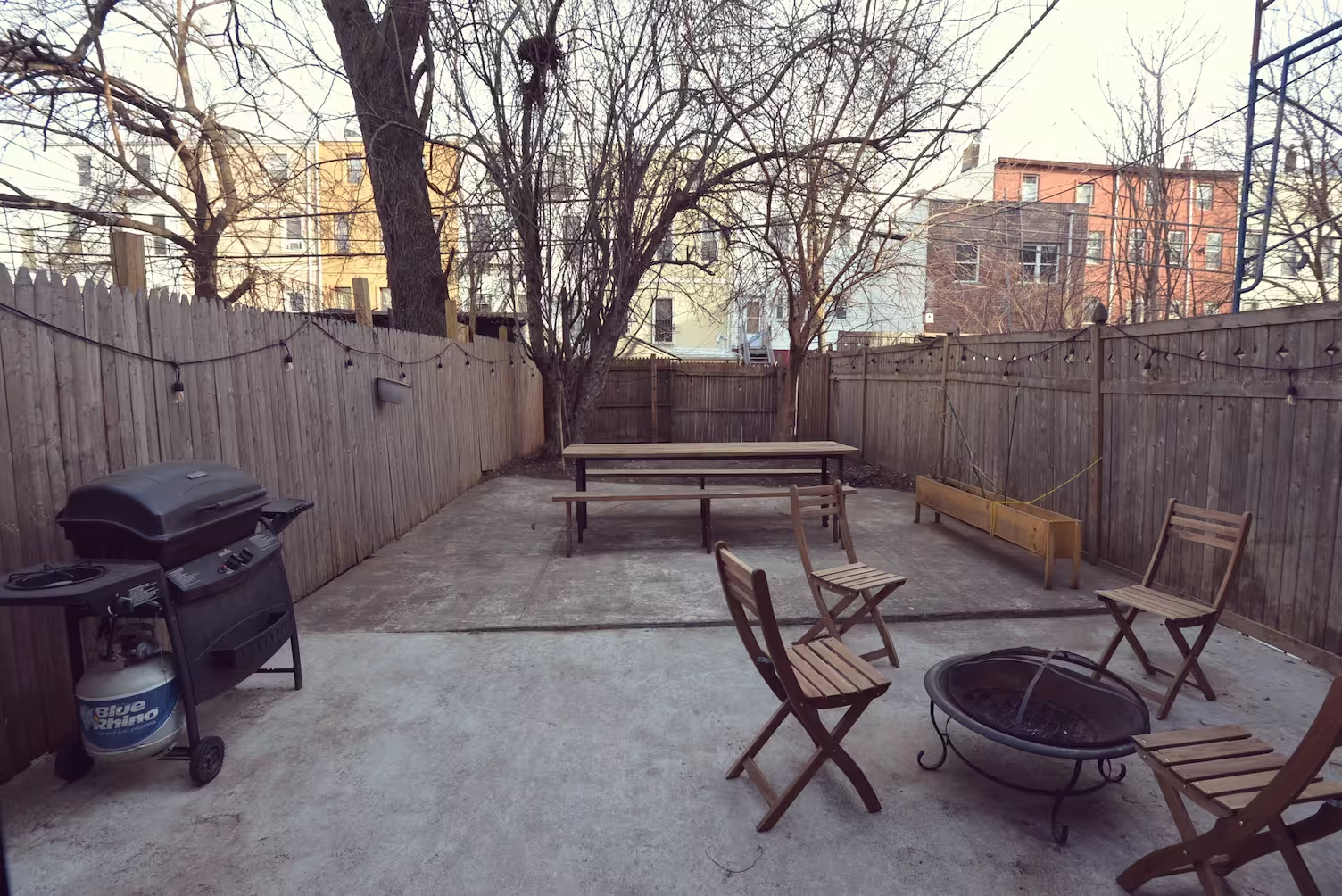
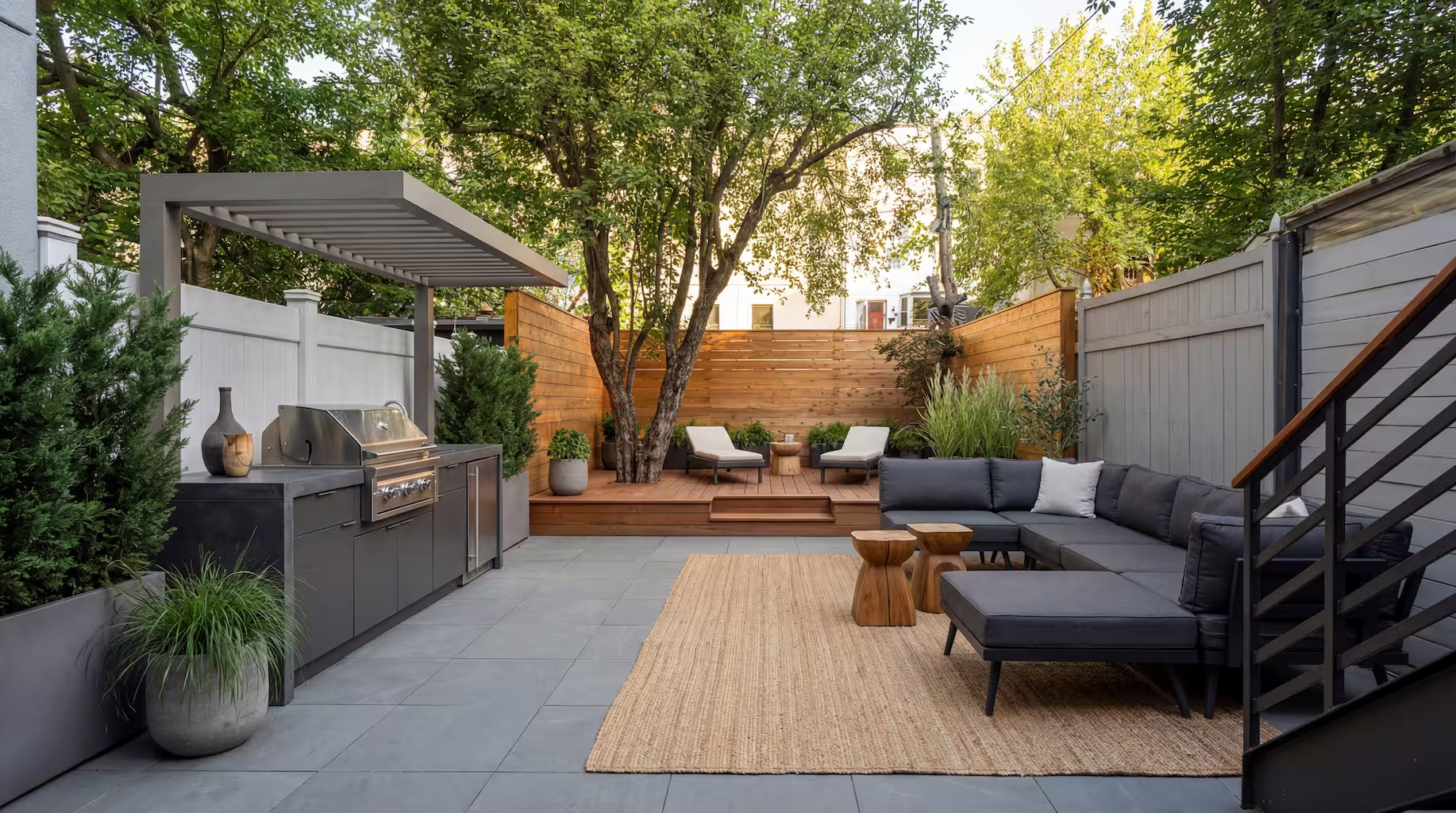
See what our clients are saying
Discover the experiences of our satisfied clients. Read their testimonials to see how BACQYARD has transformed their spaces exceeding their expectations.
How It Works
Bring your vision to life in three simple steps
Start by sharing photos of your property and telling us a little about your style. We’ll pair you with a knowledgeable landscape designer who understands your specific climate and planting zone. Whether you have a blank slate or an overgrown garden, our expert team is ready to translate your inspiration into a cohesive plan.
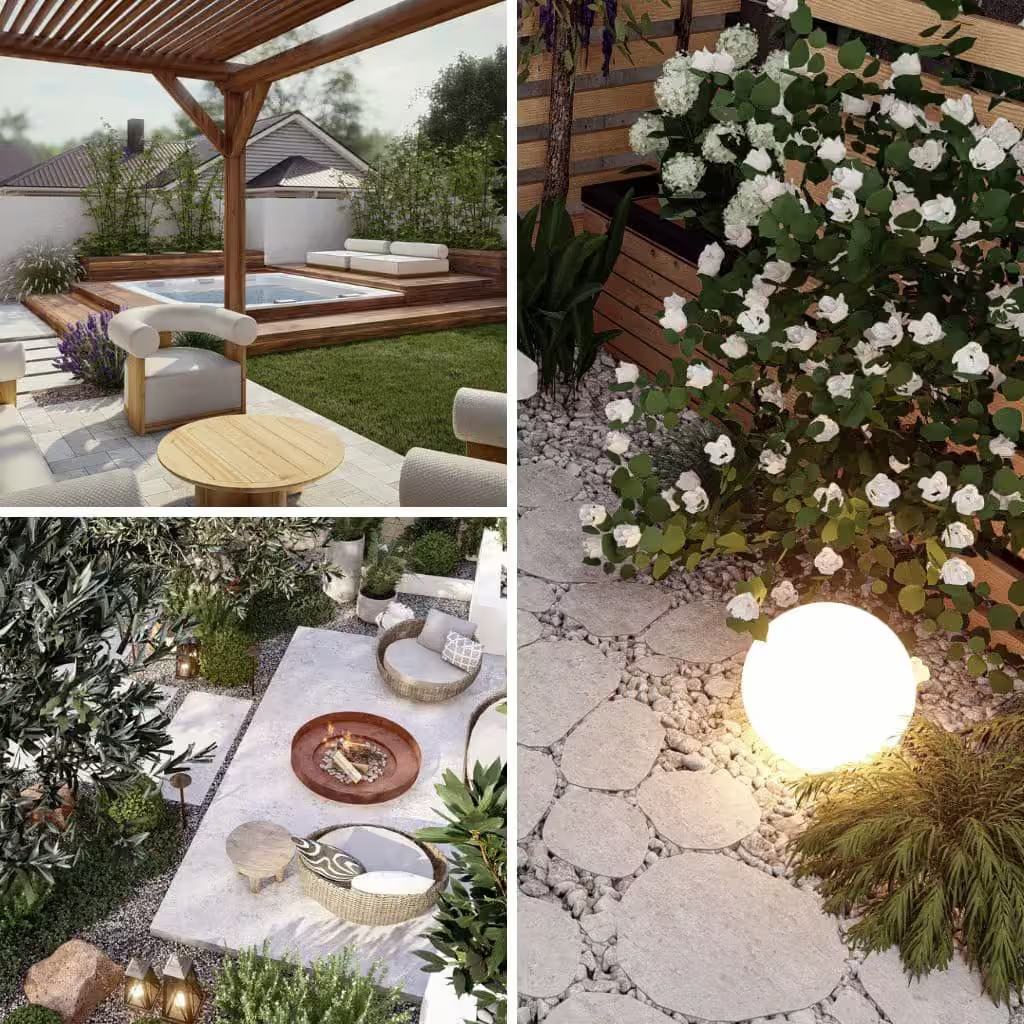
Great landscapes are built around your lifestyle. Work 1:1 with your designer to curate a layout that meets your functional needs—from dining areas to drought-tolerant gardens. You’ll be able to visualize every detail and refine the look with stunning, photorealistic 3D renderings of your actual yard before any digging begins.

We bridge the gap between design and construction. Receive a complete "Contractor Packet" including precise CAD drawings, planting lists, and material specifications. It’s everything a contractor needs to start building immediately, making the journey from "digital design" to "backyard paradise" seamless and stress-free.
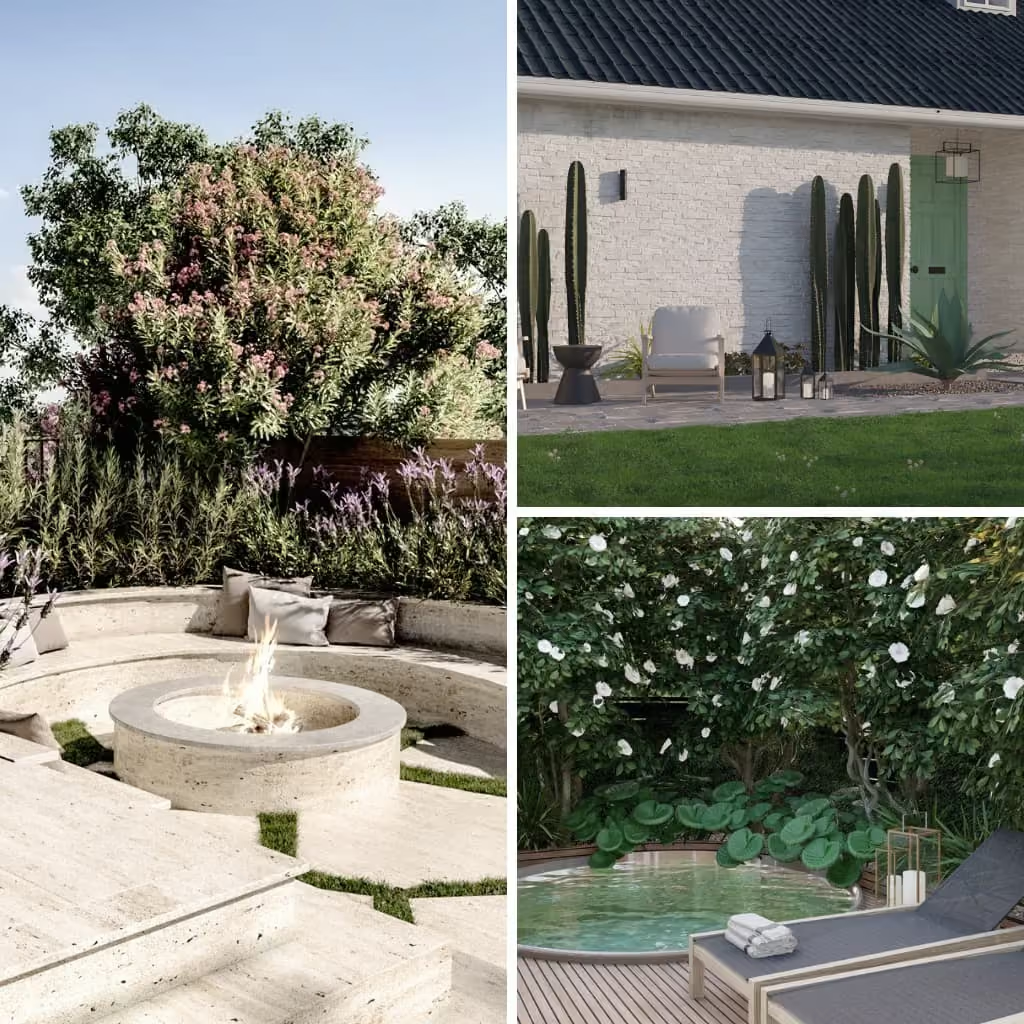
Explore our packages.
Austin areas we design for
A Tarrytown lot with a heritage live oak over 24 inches has a root zone that decides where the pool goes. Steiner Ranch has deer and a few inches of soil over limestone. Mueller pulled 52 new pool permits since 2023 on small lots, which is a layout problem before it is a design one.
West Lake Hills caps impervious cover at 25% on lots half an acre and up, and permits its own work. Rollingwood permits its own work too, under its own limits. Those addresses start with a survey.
Tarrytown, Clarksville, Hyde Park, Rosedale, Allandale, Crestview, Brentwood, Northwest Hills, Travis Heights, Bouldin Creek, Zilker, Barton Hills, East Austin including Holly, Govalle and Chestnut, Mueller, West Lake Hills, Rollingwood, Barton Creek, Lost Creek, Steiner Ranch, River Place, Great Hills, Circle C Ranch, Shady Hollow, Legend Oaks, Western Oaks, Lakeway, Bee Cave, Cedar Park, Round Rock, Georgetown, Leander, Pflugerville, Dripping Springs, Driftwood, Buda, Kyle, Lago Vista, Spicewood, Wimberley and Liberty Hill.
Austin questions we get asked
Watering days, oak wilt, deer and impervious cover. The things that decide an Austin plan.
Not a big St. Augustine one. It wants about an inch a week, more in July, and automatic irrigation is capped at one day. Wednesday for odd addresses, Thursday for even, midnight to 10am or 7pm to midnight. Hand watering, soaker hoses and bubblers on trees, and soaker hose or drip on vegetable beds are exempt any day. Soaker hose and drip everywhere else gets two days a week. So we plan beds and hardscape first, then put a small buffalo or zoysia lawn where you actually walk.
No. Texas Property Code 202.007 bars deed restrictions that stop you replacing turf with drought-resistant plants or xeriscape. The association cannot unreasonably deny it or call it aesthetically incompatible with the subdivision. It can still require a submitted plan and reasonable maintenance standards, so an unkempt yard can be cited. Your plan comes with species names and a layout a review committee can approve.
July through January. Skip February through June, when sap beetles move oak wilt. Every oak wound gets painted immediately in any season, including damage from a skid steer or a truck. Live oaks are root grafted to each other, so trenching for irrigation or a pool line near them carries the same risk. We put the oak work in the plan instead of leaving the crew to figure it out on site.
Deer resistant is the standard. Deer proof is not a real thing. Texas mountain laurel, agarita, cenizo, autumn sage and the muhly grasses hold up in Lakeway, Steiner Ranch and Lost Creek. One warning on red yucca. Deer eat the flower spikes and leave the foliage, so the plant lives and the show you paid for disappears. Vegetables and tender perennials need a fence or cages.
Inside City of Austin limits, a tree 19 inches or more in diameter at 4.5 feet above ground needs a removal permit. Heritage species like live oak, pecan and Texas ash at 24 inches or more effectively cannot be removed. Critical root zone rules also limit paving, trenching and grade change near the trunk. In Tarrytown, Hyde Park and Allandale that is usually what moves the pool, not the budget.
It changes the whole plan. East of I-35 is Blackland Prairie clay, deep and slow draining, cracking wide in drought and heaving when wet. West is Edwards Plateau, often six to twenty inches of soil over limestone, so digging is jackhammer work. East sites get raised beds and drainage. West sites get planting islands and imported soil. Both sides run alkaline and low in organic matter.
We design online. Bacqyard has no office and no crew in Austin. You send photos and measurements, then work 1-on-1 with a real designer over video. You get photorealistic 3D of your actual yard, a planting plan with species and quantities, and contractor-ready plans. You hire a local Austin contractor to build it, and you can bid the same plan to three of them. Packages start at $647, currently 35% off.
Our love your design guarantee.
We know designing your yard can be an intimidating experience. If you’re not happy with your design for whatever reason, let us know, and we’ll make it right.




Ready to co-design your outdoor space?
Start now—secure checkout, no hidden fees. Prefer to talk first? We’re happy to meet you.